HAVING finished my inquiries at Bangalore, on July 3d, 1800, I went to Agara, a fortified village two cosses distant, which is inhabited by farmers, and where a great many mangoes are raised for the Bangalore market. The intermediate country is good, but does not contain a number of inhabitants nearly sufficient to cultivate the whole. The people say, that they are in great want of rain, which is a month later than usual.
Having assembled the village officers and principal farmers, they informed me, that the merchants of Bangalore frequently advance them money to pay their rents, and are afterwards contented to take one half of the crop for the advance, and for interest. These advances are sometimes made six months before the crop is reaped.
The manner of dividing the crops, between the government and the cultivator at this village, may be taken as an example. This estimate is made on the supposition, that the heap of grain contains at least five Candacas. If it should contain forty Candacas, it pays no more; but if less than five Candacas, there is a deduction made from the allowances that are given to different persons. Twenty Candacas may be considered as the average size of the heaps.
There is first set aside from the heap,
| Seers. | |
|---|---|
| For the gods; that is, for the priests at their temples | 5 |
| For charity; that is, for the Bráhmans, Jangamas, and other mendicants | 5 |
| Carried over | 10 |
| Brought over | 10 |
| For the astrologer, or Panchánga; who, if no mendicant be present, takes also the 5 Seers | 1 |
| For the poor Bráhman of the village, whose office is hereditary | 1 |
| For the Nainda, or barber | 2 |
| For the Cumbhara, or potmaker | 2 |
| For the Vasaradava, who is both a carpenter and blacksmith | 2 |
| For the Asaga, or washerman | 2 |
| For the Alitigara, or measurer | 4 |
| For the Tarugara, or Aduca, a kind of beadle | 7 |
| For the Gauda, or chief of the village; who out of this is obliged to furnish the village sacrifices | 8 |
| For the Shanaboga, or accomptant | 10 |
The heap is then measured ; and for every Candaca that it contains, there are given the following perquisites :
| To the Toti and Talliari, or watchmen, between them, ½ Seer ; which, on a heap of 20 Candacas, is | 10 |
| To the accomptant, 2½ Seers | 45 |
| To the chief of the village, 2½ Seers | 45 |
| The Nirgunty, or conductor of water, then takes the bottom of the heap, which is about an inch thick; but this is mixed with the cow-dung that, by way of purifying it, had been spread on the ground ; in a heap of 20 Candacas, this will be | 20 |
| 169 |
The accomptant also, for every Candaca of seed sown, and which ought to produce one heap of this size, gets two men's load of straw with the grain in it.
This, on a heap of 20 Candacas of 160 Seers, amounts to about 5¼ per cent. of the gross produce. Of the remainder the government takes first ten per cent. and then a half ; so that it receives 55 per cent. of the neat produce, and the farmer receives 45 per cent.
The reason of this difference is, that formerly the country was managed by officers who, by the natives, were called Daishmucs, and by the Mussulmans Zemindars, and who were paid by receiving ten per cent. from the heap before division. When these officers were abolished by Hyder, he took the ten per cent. and paid the salaries of the new officers appointed in their places.
In dividing Jagory, a kind of scramble takes place among the same persons who shared in the heap of rice ; and in this the farmer partakes. During this scramble about a fourth part of the Jagory is taken away in handfuls, and the remainder is divided equally between the government and the farmer.
All the dry-field ought to be let for a money rent ; but besides this, the farmer must pay the following dues :
To the barber, 30 Seers for every heap of grain.
To the potmaker, for pots, from 20 to 30 Seers.
To the iron smith, 20 Seers for every plough. The farmer finds the materials ; but the smith must make all the implements of husbandry, and assist in building and repairing the farmer’s house.
To the washerman, for any family consisting of two men and two wives, or under that number, 50 Seers ; for a family of four men and four wives, 100 Seers ; and for a larger family 150 Seers.
Then for every heap of Ragy, which upon an average contains 10 Candacas, he gives,
| Seers. | |
|---|---|
| To the gods | 10 |
| To the mendicant Bráhmans, &c. | 20 |
| To the hereditary poor Bráhman of the village | 10 |
| To the astrologer | 10 |
| To the accomptant, per plough | 20 |
| To the watchman | 10 |
Other grains pay one half only of these deductions.
It not unfrequently happens, that farmers cannot be induced to take the dry-field for a money rent ; the officers of government are then necessitated to let it on a division of crops. In this case, every heap of grain of about ten Candacas pays,
| Seers. | |
|---|---|
| To the gods and Bráhmans | 10 |
| Washerman | 2 |
| Potmaker | 2 |
| Blacksmith | 2 |
| Barber | 2 |
| Accomptant | 100 |
| Watchman | 2 |
| Beadle | 10 |
| 130 |
which is about 8 1/8 per cent.
The Gauda, called corruptly Gaur, and in the Mussulman language the Potail, is the chief Ryut, or farmer, in the village, and receives the whole dues of government. The rent of each field of dry land is fixed by an old valuation, which it is supposed was made in the time of Krishna Ráyalu; and for any field more cannot be legally demanded; but the equal division of the crops is always wished for by the farmers. This, they allege, arises from the flourishing state in which the country was when the valuation was made, compared with its present poverty; but, considering the great diminution of the value of gold and silver since that period, I am more inclined to believe, that the preference given to a division of crops arises from the facility which that plan offers for defrauding the government.
The office of Gauda was originally hereditary; but now these persons are appointed by the Amildar, and continue in place so long as they keep up the collections to their supposed value, or until some other man undertakes, by bringing a greater number of farmers, to make the revenue more productive. The Gauda settles all disputes, in the same manner as the hereditary chiefs of casts do. His council always consists of four elders. In case of any delinquency in the village, the Gauda and his council instruct the Shanaboga, or accomptant, to write out a statement of the case, and to transmit it to the Amildar for his information and decision. He frequently advances money for the other farmers, to enable them to pay their rents, and has the whole of their crops as his security. The whole remuneration for his trouble, so far as is avowed, is the share which he receives in the division of the wet crops.
The Shanaboga, called Shanbogue by corruption, and Curnum by the Mussulmans, is the accomptant of the village. He is always a Bráhman, and his office is hereditary. He is under the orders of the chief of the village, who is almost always a Súdra; but the allowances of the accomptant are greater, as he must give up the whole of his time to business. He keeps all the accompts, and writes all the letters as dictated to him by the chief of the village. These two officers ought to be a mutual check on the conduct of each other.
The servants under the chief and accomptant of the village are the Toti, Talliari, Nirgunty, Tarúgara, and Alitigara.
The office of the Toti and Talliari is the same; but the first is of the Whalliaru cast, and the second is either a Madiga or a Bayda. These persons hold their places by hereditary right, and are the watchmen of the village. They are sent on all messages, and as guides for persons travelling on public business. They watch the crops in the day-time, and assist the farmers to do so at night. Their most peculiar duty, however, is to ascertain the boundaries of each field, and of each farmer’s possession.
The Nirgunty is generally a Whallia; but sometimes a Súdra holds the office, which is hereditary. His duty is, to divide the water of the tank or canal, and to convey the proper share to each man’s field. He, of course, has the charge of the sluices, and of the small canals and drains for watering the fields. He also assists in watching the crops.
The Tarugara, or Aduca, collects the farmers, and prevents them from following any other occupation than that of cultivating the land. The lower classes of people in India are like children; and, except in the more considerable places, where they meet with uncommon encouragement to industry from Europeans, are generally in such a state of apathy, that, without the orders of government, they will hardly do any thing. The duty of the Aduca is to bustle among the farmers, and to call them out to work. He may therefore be called the beadle of the village.
To eight or ten villages there is only one Alitigara, or public measurer. The office is not hereditary, and is often vacant; any one appointed for the time performing the duty, and taking the perquisites. The persons employed are commonly Whalliaru.
Each Taluc, or district, is divided into small subdivisions called Hoblies, which pay from four to nine thousand Pagodas (1,343l. 3s. 5½d.—3,022l. 1s. 8d.). These are managed by a set of officers who are interposed between the Amildars and Gaudas. The head person of a Hobly is by the natives called a Parputty, and by the Mussulmans a Sheikdar. He visits every village to see the state of cultivation and of the tanks, and settles disputes that are above the reach of the Gauda's understanding. In this he is always assisted by the advice of four old men. He ought not to inflict any corporal punishment, without the orders of the Amildar; I have, indeed, seen them dispense with this regulation, but the punishments were not severe. The Parputty receives the rents from the Gaudas, and transmits them to the Amildar. Most of these officers are Bráhmans; very few are Súdras.
In each Hobly, or subdivision, there are two accomptants, by the natives called Guddy Shanabogas, and by the Mussulmans named Sheristadars. Until Tippoo's time these officers were hereditary, and they have always been Bráhmans. In each Hobly, for every thousand Pagodas (335l. 15s. 10¼d.) rent that it pays, there is also a Munigar, or a Tahsildar, as he is called by the Mussulmans. These are the deputies of the Parputty to execute his orders, and are in fact a respectable kind of Hircaras, or messengers. They also are all Bráhmans. The whole of the Hobly establishment is paid by monthly wages.
The farmers have no leases; but, it is not customary to change any man's possession so long as he pays the fixed rent. As cultivators are at present scarce, they require to be managed with great indulgence. A man, indeed, cannot lawfully leave his farm without permission from the Amildar, or chief of the district; but, when a man complains that from poverty he is not able to cultivate his land, the Amildar must either abate his rent, allow him to go away, or make him advances to purchase stock. This is called giving Tacavy.
In this place the pasture land has a rent fixed on it, and the different inhabitants pay a proportion, according to the number of cattle that each keeps: cows and buffaloes pay at the same rate; sheep and goats pay nothing. Four fifths of the whole stock here died last year of the disease; and the people in the neighbourhood are alarmed, by its having now again made its appearance.
4th July.—I went three cosses to Sirja-pura, one of the manufacturing towns dependent on Bangalore. The weavers of Sirja-pura are of the casts called Devangas, Shalay, and Togotaru. The cloths were formerly made of a very fine quality, but at present the only demand is for coarse goods. The merchants here act merely as brokers, and the weavers frequently carry their own goods for sale to Bangalore. Purchases are made here by traders from Seringapatam, Sira, Chatrakal, Codeal, Savanuru, Gubi, Bangaluru, Colar, Malavagul, Cangundy, Hosso-cotay, Bala-pura, Tumcuru, Magadi, and Krishna-giri. The merchants of this place bring their cotton from Bangaluru, Hosso-cotay, and Colar.
Owing to a want of hands, much of the country through which I passed to-day is waste; but by the way I saw many fortified villages. The country is remarkably bare. The crops of dry grains ought now to cover the ground ; owing, however, to the want of rain, they have not yet begun to spring.
5th July.—I went four cosses to Walur, and by the way passed through a manufacturing town named Lacor. It is not quite so large as Walur ; but is a well built mud fort, strengthened by a fine hedge. The weavers of Walur are of the casts called Devangas, Padma-shalays, Shaynagas, Togotas, and Coiculru, who are a Tigul tribe, as the people here say ; for in Karnata proper, all the tribes that speak the Tamul language are called Tigulru. The cloths made by the Coiculru have red borders, like those made by the Togotaru ; but they are of a thinner fabric.
Shirays, cost from - - 1¼ Rupee to 1½. Cloth used like a shawl ¼ ditto to ½. Cloth 16 cubits long - 1¼ ditto to 1½.
For sale, the weavers carry part of their goods to the neighbouring towns at their weekly markets, and partly sell them to merchants who come from Hosso-cotay, Colar, Maasty, Lacor, Sirja-pura, Bangaluru, and Krishna-giri. They procure all their cotton from the merchants of Hosso-cotay.
The country between Sirja-puru and Walur, though naked, is very fine. Almost the whole has formerly been under cultivation ; but, from a want of inhabitants, a large proportion of it is at present waste.
I found the Bráhman who had been attentive on my former visit, and who had called himself Amildar, or chief of a district. This I now learned was a falsehood. He was only a Parputty, or chief of a subdivision ; and his civility seems to have arisen from a desire of being considered as a great man, and of receiving attentions to which he was by no means entitled. Having been now detected, he did every thing, so far as he could venture, to cross my wishes. This assumption of titles to which they have no right, is a very common piece of vanity among the natives of India, though it often leads to very severe mortifications: all the Amildars here wish to be called Subadars, or chiefs of principalities, and from all their dependents receive this title; but in the Rája's dominions two persons only have a just claim to this appellation.
Every where in Karnata the palanquin-bearers are of Telinga descent, and in their own families speak the language of their original country. In the language of Karnata they are called Teliga Bestas, but in their own dialect they are called Bui. Having assembled those who live here, they gave me the following account of their cast. Their proper occupations, beside that of carrying the palanquin, are fishing, and the distillation of rum. Wealthy men among them become farmers; but none of the cast hire themselves out as farm-servants. They are acknowledged to be of the Súdra cast, but rather of a low rank. Their hereditary chiefs are called Pedda Bui, which among the Europeans of Madras is bestowed on the head-man of every gentleman's set. They are allowed a plurality of wives, who are not confined. Though they all can eat together, they never intermarry, but with certain families, which are well known to each other, so as to avoid all danger of an impure race. They are allowed to eat sheep, goats, and fish, but ought to lose cast by drinking spirituous liquors. I well know, however, that this law is very much neglected. They bury the dead, and are all worshippers of Vishnu. They make offerings of fruit and flowers to the Saktis, but never offer bloody sacrifices to these destructive powers. Their Gurus are hereditary chiefs of the Sri Vaishnavam Bráhmans, who receive their contributions, and bestow on them holy water, and consecrated victuals; but do not give them Upadésa nor Chakrántikam. At births, marriages, and funerals, the Panchánga, or astrologer, attends as Puróhita, or priest. Some of them are taught to read and write accompts; but they never acquire any farther learning.
The potmakers and dyers form one cast, and are all properly called Cumbharu; but those who dye are, on account of their trade, called Nilgaru. The two trades are followed indifferently by persons of the same family ; but the cast is divided into two nations, the Teliga and Karnata, that do not intermarry. Those here are of the former nation, and give the following account of themselves.
They retain the Telinga language, being a tribe of that nation. They can eat in the house of a Karnataca potter, but he will not return the compliment ; as they are allowed to eat animal food, which he abhors. Even among those of the Telinga nation, all good men abstain entirely from this indulgence. It is not lawful for them to drink spirituous liquors. They are allowed polygamy ; but do not confine their women, nor divorce them for any cause except adultery. Girls continue to be marriageable after the age of puberty, and are very laborious in making pots. Widows cannot marry again ; but it is never expected that they should burn themselves with the dead bodies of their husbands.
They follow no other trades than those of potters and dyers. The hereditary chiefs of this cast are called Gotugaru, or renters, and live at the Kasba, or chief town of the district. They possess the usual jurisdiction, and are exempted from all duties, on condition of collecting the rent that is paid to government by the potmaker of every village. This office is hereditary, and we have seen that, on condition of furnishing the cultivators with pots, he receives considerable dues on all the produce of the land. In many parts of India, the potmaker is bound to supply all travellers with pots for dressing their victuals ; but here this is done to such travellers only as are going on public business, and in consideration of this the potter pays nothing for his clay. They use a wheel, but are very unskilful in their art ; for they are entirely ignorant of any glazing or enamel.
The potters of the Telinga nation say, that they are of the Sáliváhanam cast ; as that mighty king was the son of one of their women. The Bráhmans allege, that she was impregnated by one of the sacred order. These potters wear a thread like the Bráhmans, and allege, that they are possessed of Mantrams, or forms of prayer, which they can read, and which are endowed with considerable power. This is altogether denied by the Bráhmans, who laugh at the prayers of the potters, as being low trash in the vulgar language. The potters certainly understand the Andray, or poetical language of their nation, and are possessed of a translation of the Bhágavata Purána in that language.
A few of these potters worship Siva, and are followers of the Smartal Bráhmans; but by far the greater part are of Vishnu's side, and follow the hereditary chiefs of the A'ayngar. On their followers of this tribe these Gurus bestow Upadésa, Chakrántikam, and holy water. The renter settles all disputes, and punishes delinquents; the power of the Guru being confined to the bestowing of spiritual gifts, and the receiving of contributions, both as dues on marriages, and as annual tribute, besides what he gets as charity at casual visits. The Panchánga, or astrologer, acts as their Puróhita, or family priest, and reads Mantrams, or set forms of prayer, in the Sanskrit language, at births, marriages, funerals, new moons, and at the annual commemoration of their father's death, which is only called Tithi when the parties are Bráhmans. Some of the potters understand the Sanskrit, so far at least as to be able to repeat the prayer after the astrologer, which is supposed to add considerably to its efficacy. At these ceremonies there attend for charity all the Bráhmans of the neighbourhood, who are Vaidikas, and who think that they can get any thing worth their while. These worshippers of Vishnu among the potters never take the vow of Daseri; but when they are sick they sometimes make a vow to live by begging, for a certain number of days after they recover. This is looked upon as very agreeable to the gods, and a sure way of obtaining their favour. They offer bloody sacrifices to the Saktis, or destructive spirits; but never act as priests in their temples. They never pray to Dharma Rája.
6th July.—I went three cosses to the place which in our maps is named Vackaleer; but which the natives, to my ear, pronounce Waculeray. The half of the way next Walur passes through a very barren country, on which, even at this season, there is scarcely a leaf of grass to be seen. It is thinly covered with bushes and stunted trees. Beyond this there is some cultivation; and towards some rocky hills, at the foot of which Waculeray stands, the soil becomes good, and is well cultivated and wooded. Waculeray contains about a hundred houses, and is fortified by a wall and citadel, both of mud. It has no hedge. The reason assigned by the farmers for living thus together, and for shutting themselves and their cattle within the walls of a fort, is, the frequency of robbers, who live in the hills and woods, and who in the night plunder every thing that is not well secured.
The farmers in this town are seventeen houses; and there are twenty-two houses of Bráhmans, who live better, and are better lodged, than the Súdras, although, except two or three officers of government, they all subsist upon charity.
7th July.—I went three cosses to Colar. The first part of the road passed through a narrow valley, confined between two ridges of low, rocky, naked hills. The valley in many places has formerly been cultivated; but now the whole is waste, and covered with bushes, among which the Oleander (Nerium odorum) is common. Farther on, the hills to the right disappearing, the country in that direction is level to a great extent, seems to be very fertile, and has probably once been almost all cultivated. It contains many reservoirs, but from the want of trees looks very naked. The spots which at present are cultivated do not seem to be more than a tenth part of the country.
8th—11th July.—I passed these days at Colar, examining the state of agriculture in its neighbourhood. This is the most level country that I have seen above the Ghats; but it contains many bare rocky hills, which are situated at considerable distances, with level ground between them. Rice forms a very large proportion of the crop, and equals in quantity the Ragy. The country is very poorly watered, and often suffers from a want of rain ; for an old revenue officer of the place remembers four famines that arose from this cause.
Colar has a large mud fort, which is now repairing. The town contains seven hundred houses, many of which are inhabited by weavers. It was the birth-place of Hyder Aly, whose father lived and died in the town. A handsome mausoleum was erected for him by his son ; and near it a mosque, and a college of Moullahs, or Mussulman priests, with a proper establishment of musicians, were endowed to pray for the repose of his soul. The whole is kept up at the expense of the Company.
On the hill north from the town was formerly a Durga, or hill fort, in which for some time resided Cossim Khán, the general of Aurungzebe, who, towards the end of the 17th century, made the first regular establishment of Mussulman authority to the south of the Krishna river. Colar was the capital of one of the seven Pergunnahs, or districts, into which that general divided his conquests, which had been formerly invaded by the Mussulman king of Vijaya-pura (Bejapoor), and afterwards had become subject to the Marattahs. The other Pergunnahs were, Sira, Budihalu, Baswapattana, Penu-conda, Hosso-cotay, and Burra Bala-pura. These formed what the Mussulmans called the Subah of Sira, or the Carnatic Bejapoory Balaghaut, which are recent distinctions not at all known to the natives, and of which the memory is likely soon to be entirely obliterated.
The hill-fort above Colar has not been rebuilt since it was destroyed in an invasion of the Marattahs, who in the course of the 18th century made many attempts to recover this country. On the top of the hill are four small villages, which have their fields, gardens, and tanks, raised high above the level of the country, in the same manner as it is above the parts near the sea. Their little territories are surrounded by high rocks, and separated by woody ridges, like a perfect epitome of Karnata proper, or Balaghat, as it has been called by the Mussulmans. The soil is fertile, and the water in many places being near the surface renders it fit for gardens. Although hill forts are generally reckoned unhealthy, this seems to be by no means the case on this mountain. The inhabitants rather look upon the air as more healthy than common, and last year their cattle suffered much less than those of their neighbours. The hill seems to attract more moisture than the level country, and to be more favoured with rain; for a certain field on it annually produces a crop of rice, without any artificial watering, which in this arid climate is looked upon as a kind of miracle. There is a spring of water, which flows from the side of this hill in a small stream; and, such a thing being here very uncommon, the Bráhmans have conducted it along a gutter formed in the rock; and where it falls from thence, have, under a building, placed some stones, which the obliging imagination of the natives conceives to resemble a cow's mouth. The place, as being holy, is much frequented; and a ruinous temple at some distance attracts to its annual feast about ten thousand pilgrims.
Even in such a remote place, to which every access is steep and difficult, I found, that the inhabitants were not protected by their extreme poverty, but each village was provided with fortifications. The people said, that, whenever any neighbouring Polygar was troublesome, the Baydaru, or hunters, were accustomed in the night time, under pretence of being the Polygar's men, to go and plunder their neighbours. This they always did by surprise, as their love for plunder is at least equalled by their cowardice. Whenever these ruffians are prowling about, one or two men keep watch in a tower; on the first alarm, all the inhabitants fly to their arms, and, retiring to the tower, from thence fire upon the robbers, who in general attempt to carry away the cattle.
In the country round Colar, the irrigated land is watered entirely by means of reservoirs. When any rich man builds one of these, in order to acquire a name and reputation, it is customary to give him and his heirs, free of rent, one-tenth part of the land which the reservoir waters, and also for every Candaca of watered land thus formed, he obtains, free of rent, six Seers sowing of Ragy-land, which amounts to about 146 acres of dry field for every 1000 acres of that which is irrigated. So long as he enjoys these, he is bound to keep the tank in repair. If the reservoir be very large and expensive, the man who builds it, and his heirs, have one-fourth of the land which it waters; but then they get no dry-field. When the family of the original builder becomes extinct, the government reassumes the free lands, and keeps the tank in repair. Very great tanks, however, have seldom been formed by private persons; and those which cost 20,000 Pagodas (6,746l. 15s. 10¾d.), or upwards, have almost all been made at the immediate expense of the government. The farmers contribute nothing toward the building or repairing of tanks; but when, from a great and sudden influx of water, one is in danger of bursting, they all assemble, and work to clear the sluice (Cody), and other passages for letting off the superfluous water. They form the channels for conveying the water to their fields; and from their share of the crop are paid the Nirgunties, by whom it is distributed. Six of these are sufficient to manage 150 Candacas of land, which is about one hundred acres for each man.
The crops raised at Colar on watered land are rice, sugar-cane, Betel-leaf, Carlay, Hessaru, Udu, Jola, Wull' Ellu, and kitchen stuffs, called here Tarkari.
The quantity of rice sown here is nearly equal to that of Ragy. The kinds are:
| NAMES. | Season when they are reaped. | Months required to ripen. |
|---|---|---|
| 1 Doda Byra, the Doda Butta of Mysore | Both | 5 |
| 2 Doda Caimbutti | Ditto | 4 |
| 3 Arsina Caimbutti | Ditto | 4 |
| 4 Sana Caimbutti | Ditto | 4 |
| 5 Guti Sanna | Ditto | 4 |
| 6 Bily Sanna | Ditto | 4 |
| 7 Murarjilla | Kártika | 6 |
| 8 Sucadas | Vaisáka | 4 |
| 9 Punoe Raja | Both | 4 |
| 10 Yalic, or Haric Raja | Ditto | 4 |
| 11 Garuda nellu | Vaisáka | 3 |
| 12 Puttu butta | Ditto | 3 |
| 13 Toca nellu | Ditto | 3 |
| 14 Cari toca nellu | Ditto | 3 |
| 15 Gany salli | Both | 4 |
| 16 Cali Yuga, or Caliga Byra | Kártika | 6 |
| 17 Gyda Byra | Both | 5 |
| 18 Cari Bolcari | Ditto | 3 |
The seasons for cultivating rice here are two ; and the two crops, from the months in which they ripen, are named the Kártika and Vaisáka ; Kártika this year reaches from the 19th of October to the 16th of November ; Vaisáka occupied from the 23d of April to the 23d of May. In this neighbourhood no rice is transplanted. When the seed is sown dry, the cultivation is called Puledi ; when it is prepared, by being sprouted, it is, as at Seringapatam, called Mola.
The only kind of rice cultivated as Puledi, or dry seed, is the Doda Byra; and it is only sown in this manner for the Kártika crop. In the course of Vaisáka and Jyaishtha plough the ground without water four times. About the end of the latter month (22d June), after a day's rain, sow the seed broad-cast, and cover it with the plough. Then harrow the field with the implement called Halivay (Figure 9). This crop has no manure, and the field is not inundated till the end of the second month; when it must be harrowed again, and the weeds removed by the hand. A good crop of this is reckoned fifteen seeds, a middling one ten seeds.
The Mola for the Kártika crop is cultivated as follows: In Ashádha, and the first half of Srávana (23d June, 4th August), plough from seven to nine times, the field being always inundated. Then manure it, either with leaves or dung; both are rarely given: but, could they be procured, this would greatly increase the produce. Then let out all the water, except two inches in depth, and sow the prepared seed broad-cast. Next day the field is dried, and sprinkled with some dung. At the end of three days it is covered with water for four hours. On the seventh water the field for a whole day. After the tenth day, it must be kept constantly inundated to the depth of two inches. At the end of the month harrow it once lengthwise; on the third day harrow it across; and on the fifth day harrow again lengthwise. Four days afterwards weed with the hand, and repeat this after an interval of two weeks. All kinds of rice are cultivated in the same manner. The rice for seed, after being trodden out, must be dried three or four days in the sun; and may be kept either in a straw Mudy, or in a store called Canaja. When it is to be prepared, it must be dried one day in the sun; then soaked a night in water; and next morning it must be mixed with Harulu (Ricinus) leaves and dung, and tied up in straw. This is dipped in water, and placed under a large stone. In two days it must again be dipped, and is then fit for sowing. To sow an acre, the large grained rices require about 1 37⁄100 Winchester bushel; 1 9⁄100 bushel of the small grained rices is sufficient. The produce of the Doda Byra, which is the common coarse grain of the country, is the greatest. A good crop of this is said to be 15 seeds, or nearly 20 1⁄2 bushels, an acre; and a middling crop about 10 seeds, or 13 7⁄10 bushels. The other kinds, on the same extent of ground, produce eight or ten Seers less.
The Mola cultivation for the Vaisáka crop is as follows. Having inundated the field, plough it five or six days during the course of the twenty days preceding the feast Dipavali, which happens this year on the 18th of October. In the course of the next month plough four times. Then let out all the water, except two inches in depth; manure with leaves; and, having trodden these well into the mud, sow the prepared seed broad-cast. Next day dry the field, and manure it with dung. Three days after, water for two hours. Then every second day, for three times, water for four or five hours. Afterwards keep the field inundated. At the end of the month harrow, with the Halivay, three times in three directions, with a day's rest between each harrowing. A week afterwards weed with the hand, and in two weeks repeat this operation. This is the most productive crop, and gives from one to two seeds more than that which is reaped in Kártika.
It must be observed, that one or two ploughings less, or more, make a great difference in the produce. What I have stated here is the full cultivation ; but some farmers are so necessitous, that for a crop that is sown sprouted-seed, they can only afford four or five ploughings.
The mode of cultivation, or the season of sowing, makes no difference here in the quality of the grain, nor in the length of time that it will keep good. The grain is always preserved in the husk; and until wanted for immediate consumption, is never beaten. In store-houses, or Canajas, if well dried in the sun previous to its having been put up, it preserves well for two years. Paddy is sometimes kept in pits, or in the straw packages called Mudys ; but these are inferior to the store-house.
The Vaisáka crop, though entirely raised during the dry season, is by far the greatest ; as at its commencement the tanks are quite full of water, and the farmers know exactly the quantity of seed that the water which they have will bring to maturity. Frequently, indeed, at the commencement of the season for cultivating the Kártika crop, they have some water remaining ; and, if the rains set in early, might have a double crop of rice on all their wet lands ; but should the rains be late, all the seed and labour would be lost. Except, therefore, when the quantity of water in the reservoir is uncommonly great, the farmers, in place of a Kártika crop of rice, take one of some of the other grains which I have before mentioned.
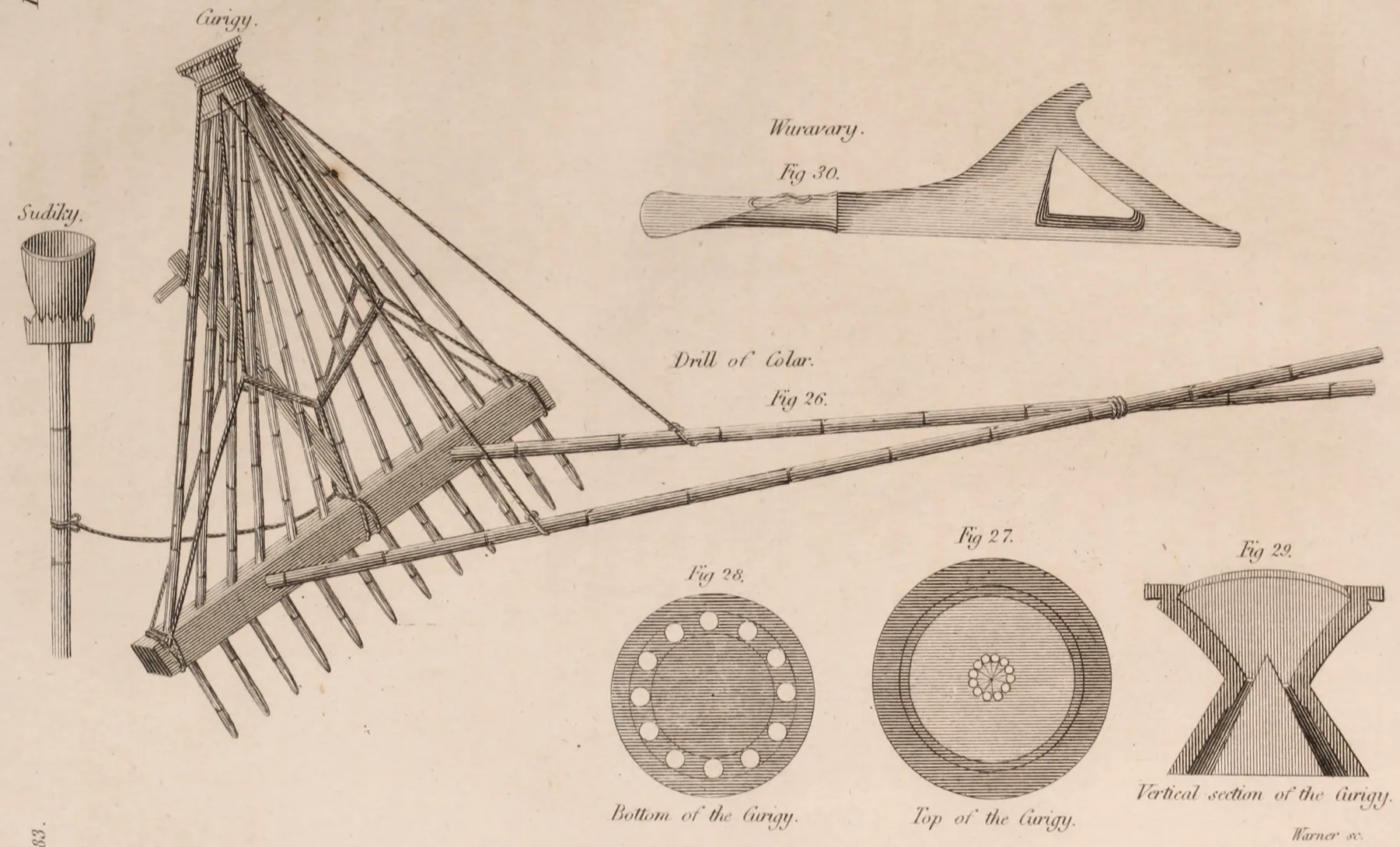
Of these crops Jola (Holcus sorghum) is the greatest. There are two kinds of it, the white and the red, which are sometimes kept separate, and sometimes sown mixed. The red is the most common. Immediately after cutting the Vaisáka crop of rice, plough four times in the course of twenty days. Wait till the first rainy day, and then, making furrows with the plough, drop in the seeds at five or six inches distance, by means of the instrument named Sudiky (Figure 26), which is tied to the handle of the plough. Then smooth the field by drawing over it a bunch of thorns. The seed having been sown too thick, when the plants have grown a month they must be thinned by a ploughing. In three months the Jola ripens, and requires no manure. In rich soils and favourable seasons it sometimes produces sixty fold ; but thirty are reckoned a good crop, and twenty-five a middling one. In rich soils the Jola is sometimes followed by Carlay, in place of a Vaisáka crop of rice. The Jola is both made into flour for puddings and cakes, and is boiled whole to eat with Curry, like rice. It is a good grain ; but, at the utmost, does not keep above two years. For cattle the straw is very inferior to that of Ragy, and when given in a green state is highly prejudicial to them. When there is a deficiency of water, Jola is also sometimes sown in place of the Vaisáka crop of rice. It is then sown toward the end of Aswaja, or 18th of October; but grows very poorly, and does not give more than one-half of what it produces in the rainy season.
In the following manner are cultivated the pulses called Udu and Hessaru, and Wull’ Ellu (Sesamum). Immediately after cutting the Vaisáka crop of rice, plough the ground four times, sow the seed broad-cast, and cover it with the plough. They require neither manure, nor weeding. The pulses require about 0,504/1000 Winchester bushel of seed an acre, and in a good crop produce about 3½ bushels. The Sesamum requires only half as much seed, and in a good crop produces 2½ bushels.
The kinds of sugar-cane cultivated here are four, which are esteemed in the following order, 1st Restali, 2d Puttaputti, 3d Maracabo, 4th Cuttaycabo. The two last are very small, seldom exceeding the thickness of the little finger; yet the Cuttaycabo is the one most commonly cultivated. This is owing to its requiring little water; for by means of the machine called Yatam it may have a supply sufficient to bring it to maturity. From the end of Phálguna to the end of Chaitra (14th March—23d April) plough eight or ten times. Manure the field with dung, and plough it again. Then spread leaves on it, and cover them with the plough. By the small channels that are to convey the water, the field is then divided into beds eight cubits broad. Furrows are then drawn across the beds at the distance of nine inches from each other. The cuttings of cane, each containing four or five eyes, are then placed lengthwise in the furrows, the end of the one touching that of the other. They are covered with a very little earth, over which is laid some dung. They are then watered, the water flowing through every channel, and entering every furrow. For one month the watering is repeated once in three days; the earth round the canes must then be loosened with the point of a sharp stick. For fifteen days more the watering must be continued; when the whole field should be hoed, and levelled with the Col Kudali (Plate II. fig. 3.). Four days afterwards, between every second row of sugar-cane a trench is dug, and into this the water flows from the channels. Thus in the progress of its cultivation each bed assumes two forms, as exemplified in the annexed sketches (Figures 31, 32). When there is no rain, the field requires to be watered once in the fifteen days. When four or five months old, the canes are tied up in bundles; and, when they are a cubit and a half high, this is repeated. In eleven months they are ripe, and a month and a half are allowed for the crop season. The soil here used for sugar-cane is the rich, black soil called Eray; and after sugar it requires one or two years rest before it gives a good crop of rice. The sugar-cane is all made into Jagory; 74 Seers measure, or nearly 18 ale gallons of juice, are said to produce 50 Cucha Seers weight (about 26½ lb. avoirdupois) of the Jagory.
Ragy, Huruli, Harica, Shamay, Huts'-Ellu, Harulu, Cambu, Hessaru, Udu, Wull' Ellu, Barugu, Navonay, Sashivay, tobacco, and Goni, are the articles cultivated on dry field ; those of which much is cultivated being placed first, and those of which little is cultivated being placed last in proportion.
The farmers do not separate the Ragy with crooked spikes, from that which has straight ones; and they consider the blackness incident to some kinds of this grain as owing to its getting wet when it is thrashing. In other places, black Ragy is considered as a distinct variety. The ground is prepared here in the same manner as at Seringapatam; but the seed is sown by means of a kind of rude drill-plough, called Curigy (Figures 26, 27, 28, 29), and made entirely of wood and bamboos. Behind the Curigy is tied the implement called Sudiky, into which is put the seed of the Avaray or Tovary; without one of which pulses Ragy is never cultivated. By this method, for every twelve drills of Ragy there is one drill of pulse. After the field has been sown, it is harrowed with the bullock-rake called Halivay, and then smoothed with a bunch of thorns, which is drawn by a bullock, and pressed down by a large stone. Here sheep are only used to trample the Ragy fields when there is a scarcity of rain. The bullock-hoe called Cunty is used on the 15th and 18th days after sowing. On the 26th day the harrowing is repeated. On the 32d the field is cleared from weeds with the implement called Wuravary (Figure 30). In four months the Ragy ripens, and in five the pulses. The farmers would always prefer thrashing it out immediately after it is reaped ; but the officers of revenue prevent them from taking it out of the stack until the balances of rent are paid, which sometimes takes up two or three months. On a good soil, Ragy will grow with a dunging given once in two years ; but, if possible, it ought to have dung every year. After most other crops Ragy thrives ill, and the ground requires much dung to bring it again into heart. Rest, or want of cultivation, is also reckoned prejudicial to a Ragy field. Forty-five fold of Ragy, and forty fold of the accompanying pulses, is reckoned a great crop ; and thirty-five of Ragy with twenty of the pulses is a middling one. This sounds great ; but the seed required for an acre being only 1 406/1000 peck of Ragy, and 422/1000 parts of a peck of the pulses, a great crop is only 15 bushels, 3,26/100 pecks of Ragy, and 4 bushels 87/100 peck of the pulses ; while a middling crop is 12 bushels 1,21/100 peck of the former, and 2 bushels 43/100 peck of the latter. This estimate is formed on the measurement of only one field.
Huruli, or Horse-gram, is of two kinds, black and white ; both are here sown intermixed. The worst qualities of soil are those commonly used for this grain ; and on the same fields Shamay, Harica, and Huts’-Ellu, are cultivated, without one crop injuring the other, or without a rotation being considered as of the smallest benefit. For Horse-gram plough twice, in the course of a few days, any time in Kártika (19th October—16th November). Then after a shower sow broad-cast; or, if none happen, steep the seed for three hours in water. Plough in the seed. It has no manure, and in three months ripens without farther trouble. Cut it down early in the morning, stack it for one day, and then dry it five days in the sun. Tread it out, and clean it with the fan. It preserves best in a store-house, but does not keep longer than one year. The forage is here reckoned inferior to Ragy straw. The seed for an acre is 1 113/1000 peck. The produce in a good crop is fifteen fold, or 4 bushels and 1/2 peck an acre; and in a middling one ten fold, or 2 bushels and 3 pecks.
For the grain called Harica, at the commencement of the rains plough three times in the course of a few days. As soon as the heavy rains begin, sow the seed broad-cast, and cover it by a third ploughing. It requires no manure, and here the pulse called Tovary is never sown with Harica. At the end of a month weed it with the implement called Wuravary. It requires six months to ripen, and is cut near the root, stacked on the field for five or six days, and then dried in the sun, and trodden out. This grain is commonly preserved in pits, and does not keep longer than one year. It is never made into flour. The straw is bad forage, and is used chiefly for manure. The seed required for an acre is 1 113/1000 peck. The produce in a good crop, twenty fold, or 5 bushels 2 1/4 pecks an acre; in a middling crop, fifteen fold, or 4 bushels 1/2 peck.
There are three kinds of the Panicum, called Shamay, cultivated; Hari, Cari, and Hal or Bily. They are never intermixed, and the cultivation of the first kind differs from that of the other two. For Hari Shamay plough three times in the same manner as for Ragy. If there be any to spare, give the field dung, sow broad-cast, and harrow with the bullock-rake. In three months the grain ripens without farther trouble; when it is cut down, stacked on the field for six days, and then trodden out. It keeps best in the store-house, and is never made into flour. Cattle eat the straw without injury, but it is inferior to the straw of either Ragy or Rice. For the other two kinds, plough three times in the course of Ashádha (23d June—21st July); then, after the first good rain, sow broad-cast, plough in the seed, and harrow. They do not necessarily require dung; but if any can be spared, they will grow the better for it. When ripe, which happens also in three months, they are managed as the other kind is. The seed and produce of all are nearly the same. Seed 8351/10000 peck an acre. Produce in a good crop, 15 fold, or 3 bushels 1/2 peck an acre; in a middling crop, 10 fold, or 2 bushels 1/3 peck.
The corymbiferous oil-bearing plant, called Huts’-Ellu, is never sown here as a second crop. After the male, or heavy rains are over, plough once, sow broad-cast, and plough in the seed. It gets no manure, and in three months ripens without farther trouble. It is then cut down near the root, stacked for six days, dried in the sun for three, and trodden out. The seed is preserved in store-houses; the straw is used only as manure. For seed, an acre requires 348/1000 parts of a peck, and in a good crop produces rather more than one bushel, while in a middling one it does not produce quite 3 1/2 pecks.
In the fields here, both the great and small kinds of Harulu, or Ricinus, are cultivated; but, although the mode of cultivation is the same for both, they are always kept separate. In the beginning of the female or slight rains plough twice. When the rains become heavy, plough again; and then, at the distance of 3/4 of a cubit from each other in all directions, place the seeds in the furrows. When the plants are a span high, weed with the plough, throwing the earth up in ridges at the roots of the plants. At the end of the first and second months from the former weeding, repeat this operation. In four months it begins to give ripe fruit; and once in the four days the bunches that are ripe are collected in a pit until a sufficient quantity is procured. It is then exposed to the sun, and the husks are beaten off with a stick. In the May following, the plant dries up, and is cut for fewel. It is only cultivated in the good Ragy soils, which it rather improves for that grain, although it gets no dung. The small kind is reckoned the best, and most productive.
The Cambu (Holcus spicatus) used here is of the kind named Sana, or Chica, both of which words signify small. In the course of eight or ten days in Vaisáka (23d April—23d May) plough twice, then sow broad-cast, and plough in the seed. No manure is required. The field is then harrowed, and smoothed with a bunch of thorns. Some people, along with this grain, put drills of the pulses called Tovaray and Horse-gram. At the end of the first month superfluous plants are destroyed by drawing furrows throughout the field, at the distance of four inches. Much care is necessary in guarding this crop, and that of Jola, from the paroquets, which are very destructive. It ripens very unequally. At the end of the third month, the first set of ears are cut off; in ten days more, a second set; and at a similar interval, the last set is reaped. The whole is kept in a heap, until two days after the last cutting; when it is dried in the sun five or six days, and then trodden out. It is commonly preserved in pits, where it does not keep longer than five or six months. The grain is sometimes given to horses; but is also used for the food of man, both boiled entire, and made into flour. Cattle eat the straw, but it is chiefly used for thatch. It is sown on good Ragy soil, but rather exhausts it, the following crop requiring an increased quantity of manure. A good crop is reckoned twenty seeds, a middling one fifteen fold.
The pulse called Hessaru is here commonly raised on dry-field. It requires a black clay; and, although it have no manure, it does not injure the following crop of Ragy. In the course of a few days in Vaisáka plough twice, sow broad-cast, plough in the seed, and harrow. In three months it ripens without farther trouble. It is then cut by the ground, stacked for six days, dried in the sun for four, and trodden out by oxen as usual. The grain, for use, is preserved in store-houses, and does not keep good more than two months, even although it be occasionally dried. The straw is totally useless, and will not even answer for manure. A good crop is reckoned ten seeds, a middling one six.
The management of the pulse called Udu is exactly the same with that of Hessaru, but its produce is rather smaller. For seed, the grain of both is preserved by mixing them with the ashes of cow-dung, which keep away insects.
The Sesamum, or Wull' Ellu, is only of one kind, and is here more commonly called Atsa Ellu. In Vaisáka plough twice without manure, sow broad-cast, and plough in the seed. In three months it ripens without farther trouble, is cut down by the ground, and is afterwards managed exactly like the Udu. The seed is preserved in the same manner. The produce in a good crop is 20 seeds, and in a middling one twelve. The straw is used for fewel.
Barugu, or the Panicum miliaceum of Linnæus, is called Codra by the Mussulmans of the south, and Pani Varagu by the inhabitants of Coimbetore. There is only one kind. After the heavy rains have ceased, plough twice, and without manure sow broad-cast, and plough in the seed. Without any farther trouble it ripens in two months and a half, is cut down close by the ground, stacked for one or two days, and then trodden out. The grain is kept in store-houses, and preserves well for two years. It is boiled entire, like rice. The straw is only used for fewel. A good crop produces twelve seeds, a middling one eight. It requires a rich black clay.
The people here know of no distinction in the kinds of Navonay, or Panicum Italicum. The ground for it is prepared as for Ragy; and when ready, the end of a Ragy field is sown broad-cast with Navonay; the seed is ploughed in, and the ground, which requires no dung, is harrowed. It has no weeding, and ripens a little before the Ragy. The ears are cut off, kept in a heap for two days, dried in the sun, and then trodden out. In store-houses the grain will preserve for two or three years. It does not injure the ground for Ragy. In a good crop it produces only twelve fold, in a middling one eight. The straw is used only for fewel, which is here a very scarce article.
The Sashivay is a mustard, which is always sown mixed with Ragy. It ripens sooner than that grain ; and, when dry, the branches are broken with the hand, exposed two days to the sun, and then beaten out with a stick. In this country, oil is never made from the seed, as is usual in Bengal ; it is employed as a seasoning in curries and pickles.
Tobacco is planted in very small quantities ; and that which is raised here is reckoned greatly inferior to what is brought from the low country. The consumption is not great.
The Janupa, Goni-plant, or Crotolaria juncea, is here always raised by the manufacturers, exactly in the manner that I have described at Bangalore (see page 226).
In this district, the cultivation of the Betel-leaf, or Piper Betle, although it is commonly, is not always, a separate profession. It thrives best in low ground, where it can have a supply of water from a reservoir. If that cannot be had, a place is selected, where water can be procured by digging to a small depth. A black soil is required ; and as it pays no rent for the first three years, land that has been waste is generally granted for the purpose. After the Betel-garden fails, the land is given to the farmer ; who in the first year generally takes a crop of sugar-cane, which thrives remarkably well ; for the kinds called Restali and Puttaputty grow to the length of eight cubits. The Betel-leaf garden pays 5 Fanams (about 3s. 4d.) for every 100 holes ; but this is less rent than the government derives from sugar-cane. In these gardens ginger is commonly planted. A Betel-leaf garden is thus managed. In Chaitra, or Vaisáka, (26th March—23d May) trench over the whole ground one cubit deep, and surround it with a mud wall ; immediately within which plant a hedge of the Euphorbium Tirucalli, and of the Arundo tibialis (Roxb: MSS.). When there is not plenty of rain, this must for six months be regularly watered. Then dig the garden, and form it into proper beds, leaving a space of about twenty feet between them and the hedge. The sketch (Figure 33) will assist the imagination in understanding the description of the beds. From the main channel for conducting the water to the garden (1), draw others (2) at right angles, and distant 22 cubits. Between every two of these, to drain off the superfluous water, draw others (3.3) about a cubit wide, and deeper than the former. The garden is thus divided into rows ten cubits in width, having on one side an elevated channel (2) for supplying it with water, and on the other side a deep canal (3), to carry off what is superfluous. These rows (4) are divided into beds, six cubits wide (5), by cuts made from the deep canals, and ending in cul de sacs (6), which carry off the water into their principals. Each of these beds is divided into two parts (7), by a narrow channel coming from those which bring the supply of water. Each division of a bed, therefore, has on one side a channel (8) to supply it with water, and on the other a canal (6), to carry off what is superfluous; and it is surrounded by a narrow bank, about six inches high (9), which excludes the water that flows through the channels: within these little banks the divisions of the beds are carefully levelled. In the center of each division is then formed a row of small holes, distant from each other one cubit; and in Panshya (17th December—14th January) in every hole are put two cuttings of the Betel-leaf vine, each two cubits long. The middle of each cutting is pushed down, and slightly covered with earth; while the four ends project, and form an equal number of young plants, which for the first eighteen months are allowed to climb upon dry sticks, that are put in for the purpose. For the first week after being planted, the shoots, must be watered twice a day with pots; for another week once a day, and until the end of the second month once in three days. A small drill is then made across each division of the beds, and between every two holes in each; and in these drills are planted rows of the seeds of the Agashay, or Aschynomone grandiflora; Nugay, or Guilandina Moringa; and Varjepu, or Erythrina indica, E. M. The young Betel plants must then have some dung, and for four months more must be watered with the pot once in three days. Afterwards, so long as the garden lasts, all the channels must once in four days be filled with water. This keeps the ground sufficiently moist, and water applied immediately to the plants is injurious. The garden ought to be kept clean from weeds by the hand, and once a year, in December, must have dung. When the plants are a year and a half old, they are removed from the sticks; two cubits of each, next the root, is buried in the earth; and the remainder, conducted close to the root of one of the young trees, is allowed to support itself on the stem. At the end of two years two cubits more of each plant are buried in the ground; and ever afterwards, this is once a year repeated. At the beginning of the fourth year the cultivator begins to gather the leaves for sale, and for six or seven years continues to obtain a constant supply. Afterwards the plants die, and a new garden must be formed in some other place. In order to give additional coolness to the garden, at its first formation a plantain tree is put at each corner of every bed, and by means of suckers soon forms a cluster. So long as the garden lasts these clusters are preserved. At all times the gardens are very cool and pleasant; but they are not neatly kept; and in the space between the hedge and the beds, a great variety of bushes and weeds are allowed to grow.
In this part of the country there are no palm gardens of any consequence.
In what formed the Pergunnah of Colar, and which includes Bangalore, probably from having been longer under a Mussulman government, the Tarkari, or kitchen gardens, seem to be more extensive, and better cultivated, than those near Seringapatam. They are chiefly cultivated by the cast called Vana Palli, as I have lately mentioned, a people who originally came from the lower Carnatic. At Colar the gardens are in very bad order; but at some neighbouring places I have seen them very neat. The soil, to be fit for these gardens, ought to be black rich mould, where water may be had by digging wells to no great depth; for they are all watered by the machine called Yatam.
In this immediate neighbourhood the Yatams that are wrought by men walking backwards and forwards on the lever are preferred. There are here two kinds; one in which two men walk on the balance, which has a bucket containing 40 Seers, or 9 734⁄1000 ale gallons, and which can raise this five men’s height, or 26 feet 3 inches. In the other kind, one man only walks on the lever, and can raise 32 Seers, or 7 787⁄1000 ale gallons, from the depth of three men’s stature, or 15 3⁄4 feet; for, the men here being in general small, 3 1⁄2 cubits, or 5 1⁄4 feet, are reckoned the ordinary human stature. The people of this place reckon, that the same number of men will raise more water by the larger Yatam, than by the smaller one; and much more by their small one, than by the Yatam which is wrought entirely from below: of this, however, I am doubtful. The machine here is equally rude with that described at Bangalore. I examined one while it was at work, and which was wrought by two men on the lever. It raised the water only eight feet, and at each time thirty five Seers only could be emptied from the bucket. It drew water six times in the minute, and consequently raised 3066 ale gallons in the hour, or 1022 gallons for each man; but at Bangalore each man can raise 671 gallons to more than double the height. I have seen the single Yatam drawing water from about eight feet deep at the rate of seven times a minute, by which means a man will raise 1175 gallons an hour.
Garden ground, in order to have a sale for its produce, must be near a town. It pays a fixed money rent, in proportion to what it would pay if cultivated for dry grains, but much higher. Beside the garden stuffs cultivated at Seringapatam, the gardeners of this country raise, Gaysagussa, or Papaver somniferum. Cossumba, or Carthamus tinctorius. Godi Juvi, or the wheat called Triticum monococcum. Toor, or Nawt Ragy, a variety of Cynosurus Corocanus.
I shall give some examples of their modes of cultivation; on which, at the same time, several articles are in general raised on the same ground; and almost always the same ground gives annually two crops.
The poppy, Papaver somniferum, is plentifully cultivated both for making opium, and on account of the seed; which is much used in the sweet cakes that are eaten by the higher ranks of the natives. In Aswaja (19th September—18th October) dig the ground one cubit deep with the Col Kudáli (Plate II. fig. 3). In the following month smooth the ground, and divide it into small plots of three cubits square, separated from each other by small banks, like those of rice fields, but neater and lower; and at the same time form channels winding through the plots, so that every one may have a channel running past one of its sides. By this method any quantity of water which the plant requires is very readily conveyed to the whole. When the channels and squares are formed, the garden is dunged, and the poppy seed is sown. Over this is sprinkled a little more dung. At every span’s length two seeds of the Cossumba are then planted on the small mounds which separate the squares; or in place of Cossumba, radishes are sometimes raised. Water is then given to every square, and once in four days this is repeated. After the plants have acquired strength, no preference is given to any particular time of the day for watering; but, while they are very young, the morning is preferred. In six or seven days the poppies will be two inches high; and then the gardener with a shell removes those that are superfluous, so as to leave them about four inches apart. In twenty days they are about six inches high; the weeds must then be removed with a small hoe, and a very little dung must be given. In two months and a half the poppy is ready for making opium, and in three months the seed is ripe. It is not injured by extracting the opium; which operation is performed by the gardeners, who sell the produce to the drug-merchant. In six weeks the radishes are fit for pulling, and in three months the Cossumba begins to flower. As the flowers begin to decay, the flowerets (flosculi) are pulled out by the hand from the common cup (Perianthum commune), exposed to the sun till dry, and then preserved in pots; when they are fit for being sold to the dyers. This operation does not prevent the seeds from ripening; and in the cookery of the natives a decoction of them is much used.
After the Cossumba has been collected, the same ground may be cultivated either with wheat or with Garden Ragy.
The wheat (Triticum monococcum) in this climate is very liable to be blighted; and even when it succeeds, its produce is not more than one half of that of Paddy: but as one half of this last is husk, the consumable produce of wheat and rice is not very different. Tippoo was at great pains to increase this kind of cultivation; and, as an encouragement, sent seed to be distributed in different places. Here the quantity might yet be greatly increased; as much of the higher lands, now cultivated for rice, are fit for wheat. The ground is sometimes ploughed five times; and sometimes dug with the hoe called Col Kudáli to the depth of one cubit, which is reckoned preferable. In Jyaishtha (24th May—22d June) the seed is sown broad-cast, and covered with the hoe. The channels and squares are then formed, as for the poppies; and the ground is smoothed with the hand, and dunged; while such of the seed, as may happen to be above ground, is pushed down with the finger. In forty-five days the field must be watered nine times. It is then weeded with the instrument called Wuravary (Fig. 30.); after which one watering in six days suffices. It ripens in three months, is cut, tied up in small sheaves, and stacked for four days. It is then dried one day in the sun, and thrashed out by beating the sheaves against a log of timber. To separate the awns, the grain is then beaten with a stick. In the fields of wheat, radishes are planted on the mounds which divide the squares.
The Toor, Tota, or Nat' Ragy, is not the same with that cultivated on dry grounds, although in the sense adopted by botanists it is not specifically different; but the seed which is raised on dry-field will not thrive in gardens; nor will that which is raised in gardens thrive without irrigation. Garden Ragy is always transplanted, and hence it is called Nati. For the seedling bed, dig the ground in Paushya (17th December—14th January), and give it a little dung. Divide it into squares, and let it have some more manure. Then sow the seed very thick; cover it with dung, and give it water, which must be repeated once in three days. The ground, into which it is to be transplanted, is in Paushya ploughed five times; and must be dunged and divided into squares with proper channels, like a poppy garden. About the beginning of Mágha, or end of January, water the seedlings well, and pull them up by the roots: tie them in bundles, and put them in water. Then reduce to mud the ground into which they are to be transplanted, and place the young Ragy in it, with four inches distance between each plant. Next day water, and every third day for a month this must be repeated. Then weed with a small hoe, and water once in four days. It ripens in three months from the time when the seed was sown; and in a middling crop produces twenty fold. It is only sown on the ground at times when no other crop could be procured, as the expense of cultivation nearly equals the value of the crop.
The leaves or shoots used by the farmers here as manure are, the Handur; the Canaga, or Robinia mitis; the Yecada, or Asclepias gigantea; the Calli, or Euphorbium Tirucalli; the Devadarum, or Erythroxylon sideroxyloides, E. M.; the Cadangody, or Convolvulus cuneiformis, Buch: MSS.; the Gandary; the Utrany, or Achyranthes muricata; the Dotury, or Argemone; the Wumutty, or Datura Metel; the Tumbay, or Phlomis esculenta, Roxb: MSS.; and the Hungara, or Dodonea viscosa.
The farmers form their dung-hills of the dung and litter of their cattle, and of the ashes and soil of their houses, all intermixed. They do not employ the soil of towns.
The number of oxen raised in the country is not sufficient for the demand of the farmers, who purchase them at Krishna-giri and Cangundy, two places in the Bára Mahál. It is not the custom here to pay any rent for such pasture lands as have never been cultivated; but, where a part of the ground that has been cultivated becomes waste, the cultivators give a small consideration for liberty to feed their cattle on it. The proportion of this rent does not exceed 8 per cent. of that which is given for the ground when in cultivation: indeed the pasture is so wretched, that more could not be afforded. Last year about one half of the cattle here died.
The servants of the farmers, or the Batigaru, get here annually 4 Candacas (29 23/100 bushels) of grain, and twenty Fanams in money (about 13s. 5d.); but out of this, he must pay to government, for the ground on which his house stands, three Fanams, or about 2s. They are of all casts, except Bráhmans and Mussulmans.
Men hired by the day to labour in the field get 1/3 of a Fanam (3 142/1000 pence) a day, and women 1/4 of a Fanam, or nearly 2 pence.
When a farmer runs away for arrears of rent, or oppression, and goes into the district of another Amildar, it is not customary in any native government to give him up. This is a considerable check to arbitrary oppression, as a very unreasonable Amildar would be soon deserted. The Gaudas here rent the villages, and every year make a new settlement with the Amildar; while they receive authority to take from the cultivators as much as they legally can. Some Gaudas rent two or three Grámas, or villages; but to each there is an hereditary Gauda, who receives the title, is at all public meetings treated with certain marks of deference, and at the village feasts performs certain religious ceremonies. Should he not be the person who rents the village, his civil authority ceases; but, without inviting the hereditary chief to attend, the renter cannot call an assembly of the elders, to settle the disputes cognizable by such jurisdictions.
In almost every village (Gráma) the customs of the farmers, especially in dividing the crops, are different. The Shanaboga, or village accomptant, keeps a written account of these customs; which is referred to as being the law, or custom of the manor: for of the word Gráma manor would perhaps be a better translation than village, which is usually given. The custom of Colar in dividing the crop of rice is as follows:
The corn, when cut down, is made up into burthens, as large as a man can carry on his head. From each of these is taken a bunch, equal in all to about 56/80 parts of the seed sown. These parts are divided thus:
| Seers. | |
|---|---|
| To the Nirgunty, or distributer of water | 16 |
| To the Toti, or watchman | 16 |
| To the Aduca, or beadle, called here Cauliga | 16 |
| To the iron smith | 8 |
| 56 |
Then from the heap is taken,
| By the Toti, or watchman, whatever sticks to the seals of mud, that he puts on to prevent embezzlement, which may be about | 3 |
| By the Pujaries, or priests of the village gods | 4 |
| By vagrants of all religions and kinds, who, under pretence of dedicating themselves to God, live by begging | 4 |
| By the Gauda who rents the village, as his perquisite | 8 |
| By the government, as its perquisite, called Sadi | 16 |
| By the hereditary Gauda, or chief of the village, in order to defray the expense of the feast which is given to Ganésa, under the form of a stake of the Cassia Fistula | 16 |
| Seers | 51 |
The heap is then measured, and divided equally between the government, or renter, and the farmer; but a certain portion is left, which is divided as follows:
From this portion twelve Seers for every Candaca in the heap are measured, of which the accomptant takes one third, and the remainder goes to the renter. This formerly belonged to the Daishmucs, or Zemeendars; but these having been abolished by Hyder, and officers paid by regular salaries having been established in their stead, it was but fair that government should receive this perquisite. Indeed, most of Hyder's operations in finance seem to have been highly judicious and reasonable; and on account of his justice, wisdom, and moderation, his memory is greatly respected by the natives of all descriptions.
From what remains there is taken,
| Seers. | |
|---|---|
| By the Panchánga, or astrologer | 1 |
| By the Cumbharu, or potmaker | 1 |
| By the Assaga, or washerman, | 1 |
| By the Vasara-dava, or blacksmith and carpenter, | 1 |
| By the measurer the sweepings, about | 8 |
| Seers | 12 |
It is evident, from the very unequal size of the heaps, and various rates of produce in different soils and seasons, that no exact calculation can be formed of the amount of these perquisites on the whole crop. If the heap contain 20 Candacas, and the produce be ten seeds, then they will amount to about 17 per cent. ; of which the government gets 5½ per cent.; or all together 47 per cent. of the crop; from which is to be deducted the expence of the tanks.
In order to encourage the industry of the farmers, when there is not a sufficient quantity of water to cultivate rice, the government advances the seed of the other grains that are raised on such occasions, and receives one half of the produce.
All accompts are here kept in Canter'raia Pagodas and Fanams. The latter passes at present for 17 Dudus, and 13 1/4 are only equal to 1 Ikery Pagoda; but, in order to preserve uniformity, I make all my calculations by the exchange at Seringapatam, where 12 Fanams are equal to the Pagoda. In fact, according to the assay made at the Calcutta mint, the Ikery or Sultany Pagoda is worth very nearly 12,913 Fanams; so that at Seringapatam the Fanam passes for more than its intrinsic value, and here it passes for less. The Niruc, or rate of exchange, by which all different coins can be offered as a legal tender of payment, is fixed once or twice a month by the Amildar, who on such occasions assembles all the principal merchants, and acts by their advice.
The common Cucha seer here weighs only 21 Dubs; and the Maund contains 48 Seers, or is equal to 25 49/100 lb.; but Jagory, or coarse sugar, tamarinds, and Ghee, or boiled butter, are sold by a Maund of 52 Seers, or of 27 6/10 lb.
The Candaca measure contains 160 Seers of the same standard with that at Seringapatam. The Sultan failed entirely in his endeavours to introduce an uniformity of weights and measures. Grain is always sold by the hundred Seer.
The trade and manufactures of Colar had been entirely ruined by Tippoo; as it was in the immediate neighbourhood of his enemies dominions, with whom he would allow of no communication. Both are now rapidly on the increase, and exceed even what they were in the reign of Hyder. No army came this way in the last war; but they suffered a little in the invasion by General Smith, and considerably by that of Lord Cornwallis. The merchants suffered much by Tippoo's forcing goods on them at a high rate; and still more by his capriciously forcing them to change the places of their abode. He frequently founded new Bazars, or market towns, and compelled merchants to remove thither; although the place might be quite out of the way by which their trade was usually conducted. From the officers of the Nabob of Arcot, merchants meet with no annoyance. Some of them, being constant traders, take from the custom-houses what they call Cowl, or protection; and on that account pay only one half of the duties that are exacted from occasional visitors. A merchant who has this kind of protection, for every 800 Maunds of Betel-nut, worth about 550l. pays to the Nabob's custom-houses, on the way between this and Wallaja-petta, 33 Star Pagodas, or a little more than 12l.
In the country villages much coarse cloth is made by the Whalliaru weavers. Those in the town are Dévángas and Shaynigaru, who make the white cotton cloth with silk borders called Putaynshina. They make also the muslins called Sada Shilla, and Dutary, and white turbans.
Merchants from Balahari, Advany, Naragunda, Navalagunda, Maynashigy, Jaliali, and Anagiri, places near the Krishna river, bring cotton wool, cotton thread, dark blue cotton cloth, Terra Japonica, asafœtida, dates, almonds, and Mailtuta, which is used as a dentifrice. The merchants of Balahari take back in cash ¾ of the returns, and the remainder in castor-oil, Popli dye, and Jagory. The other merchants take back the whole in cash. The merchants of Hyder-Nagar bring betel-nut, black-pepper, and sandal-wood. They take back cash, and a little white muslin. Here the merchants of Seringapatam purchase cloth with cash. The merchants of Gubi bring betel-nut, and black-pepper; and take back cloth, and some money. From Sira the same articles are brought; the returns are entirely in cloth. From Bala-pura are brought sugar, and some cloth fitted for the dress of women. From the lower Carnatic the merchants bring salt, and the goods that are imported by sea from Europe, China, Malacca, &c. with a considerable balance of money due for the betel-nut, black-pepper, garlick, tamarinds, Shicai (fruit of the Mimosa saponaria), and grain, that are sent from hence. The silk is all brought from Bangalore, and no cotton grows in the country.
In this place are settled a kind of shoe-makers called Muchaveru; they are Rajputs, and in their families retain the Hindustány language, as having originally come from the country which the Mussulmans call Agimere. Like all the persons of an unmixed breed from that country, they pretend to be of the Kshatriya cast; but this high rank is denied by the Bráhmans to even the highest of the Rajputs, those whose profession is agriculture and arms, and who, the Bráhmans say, are merely the highest class of the Súdras, like the Nairs of Malabar, or Káyastas of Bengal. These shoe-makers are not allowed to eat nor to intermarry with the Chitrakaru, nor with the weavers, who come from the same country; and much less with the Rajputs properly so called, who are by cast the cultivators and defenders of the soil. They came into this country with Cossim Khán, the general of Aurungzebe, and settled chiefly here and at Sira. They follow no other profession than that of making shoes. The proper Gurus of this cast are the Vairágis, who read to them, and receive their charity. The Panchánga, or astrologer, attends their marriages, and gives them a kind of Upadésa. None of them can read. They are worshippers of Vishnu, and do not pray nor offer sacrifices to the Saktis, nor to Dharma Raja; but contribute their share of the expense at the sacrifices, and festivals, which the village as a public body performs in honour of these gods. They are allowed to eat mutton and fish, but not to drink spirituous liquors. They are allowed to marry several wives, and confine them after the custom of their own country. They have chiefs, who determine matters relating to cast; but their office is not hereditary: they are elected in an assembly of the people.
The Telega Uparu are a tribe of Telinga origin, as their name expresses; and retain in their families the language of their original country. They can give no account of the time when they came to Colar. Their proper occupation is the building of mud walls, especially those of forts; but some of them are farmers, and some farmers servants, or Batigaru; they act also as porters. They have hereditary chiefs called Ijyamána, who possess the usual jurisdiction. None of them can read or write. They are allowed to eat venison, mutton, fowls, swine, and fish; but cannot avowedly drink spirituous liquors. They are allowed a plurality of wives, who are very laborious, and each costs five Pagodas (1l. 16s. 7½d.), which are presented to her parents. The girls continue to be marriageable after the age of puberty; but a widow cannot take a second husband. They bury the dead. They never take the vow of Daseri, or of dedicating themselves to the service of the gods. The god of their cast is Vishnu; but they pray to Dharma Rája, and offer sacrifices to the Saktis. They have no knowledge of a future life, and pray only for temporal blessings. Their Gurus are the hereditary chiefs of the Sri Vaishnavam Bráhmans, who on the richer part of the cast bestow Upadésa and Chákrantikam. The Panchánga, or astrologer, attends only at marriages.
A Smartal Bráhman, reckoned a man of learning, but who seems to be very unwilling to open such stores as he possesses, denies all knowledge of the worshippers of Jain, Buddha, or the Linga, farther than that he has heard them mentioned. The doctrines of all other sects, but his own, he considers as contemptible, and not worthy of notice.
He believes in a supreme god called Náráyana, or Para Brahmă, from whence proceeded Siva, Vishnu, and Brahmā; which still, however, are all the same god. His sect pray to Siva and Vishnu, with many of their wives, children, and attendants, among whom are the Saktis, or destructive powers. Siva, however, is the principal object of their worship; for they consider him as the most powerful mediator with Náráyana, who is rather too much elevated to attend to their personal requests. They abhor bloody sacrifices; but do not reprehend their followers, of the Súdra cast, for using that manner of worship. They say, that it is the custom of the Súdras; and that what these low people do is of little or no consequence. When a good Bráhman dies, his spirit is united to God; but a bad one is first punished in a purgatory, and then by passing through various other lives, as an animal, or as a person of some of the low casts, till at last he becomes a Bráhman, and has another opportunity by his good works of gaining heaven.
Sringa-giri, south from Hyder Nagar, is by this person considered as the chief throne of the Bráhmans. There God assumed the form of a Bráhman named Sankara Achárya, and, having become a Sannyási, established his Mata, or college, at the place at which there has ever since been a succession of Sannyásis, who are the Gurus of the order, and are called Swamalus. In different places of India these have established agents, or deputies, who are also Sannyásis, and assume the title of Swamalu. Originally these agents were all sent from the college at Sringa-giri; but now, although they acknowledge the superiority of the representative of Sankara Achárya, they all educate young men in their own Matas, or colleges, and from among them appoint their successors. In the chief college at Sringa-giri there are many disciples, who are all of Vaidika families, who never marry, and who are carefully educated in such learning as the Bráhmans possess. They are called Brahma Cháris; and from among them the Guru, when he is about to die, selects the one that appears to him most deserving, and reveals to him the Upadésa peculiar to his rank, by which the favourite becomes his successor. The inferior Swamalus (properly Swámyálu) educate in a similar manner their successors. Should the Sringa-giri Swamalu die without appointing a successor, the deputies or agents assemble, and select from among the Brahma Cháris the most deserving person, and, revealing to him the Upadésa, constitute him their chief. Till he is on the point of death, a Swamalu is very unwilling to deliver the Upadésa to a successor; as, immediately on getting possession of it, his power becomes equal to his own; and if he should recover, the new Swamalu might remove to another college, and act independent of his authority.
Besides the Vedas, and eighteen Puránas supposed to have been written by Vyása, which are common to all Bráhmans, the Smartal sect follow, as peculiar to themselves, four Sástrams, or books, called Mimása, Tarka, Vyákaranam, and Védánta, which are said to contain a system of logic, metaphysics, and grammar, that is necessary to explain the doctrine of the Védas; and the Sankara Bhashá, a commentary which explains the doctrine of the Sutras.
The Gurus of the Smartal sect seem to act chiefly in an episcopal capacity; that is, as superintendants of the manners of their followers. They would not appear to perform any ceremony for the sect, which, as being followers of Siva, does not admit of Chakrántikam; and among the Smartal, it is the Puróhita who gives Upadésa. When a Smartal commits any fault, if the Guru or his deputy be near, he assembles ten learned men of the sect, and with their advice punishes the delinquent. If, however, the fault be of such a nature as to deserve excommunication, which is the highest punishment, the Guru must for the purpose assemble a Trimatasteru, or council composed of the most learned men of the three sects, Smartal, A'ayngar, and Madual. These councils may be held, and may punish delinquents, without the presence of either Guru, or deputy. The faults that occasion a loss of cast, and for which no pardon can be given, are, I. Sexual intercourse within the prohibited degree of consanguinity. II. Sexual intercourse with any prohibited cast. III. Eating forbidden food, or drinking intoxicating liquors. IV. Stealing. V. Slaying of any animal of the cow kind, or of the human species; but a Bráhman is permitted to kill his enemy in battle. VI. Eating in company with persons of another cast, or of food dressed by their impure hands. VII. Eating on board a ship food that has been dressed there. VIII. Omitting to perform the ceremonies due to their deceased parents. For smaller offences, the Guru or his deputies punish in various ways; by commanding pilgrimages, or fasts; by fines; by holding burning straw to the body of the delinquent, which is sometimes done with such severity as to occasion death; by shaving the head, so as to occasion a temporary separation from the cast; and by giving large draughts of cow's urine, which is supposed to have the power of washing away sin. Ordeals are also in use; and a most barbarous one is applied to those who, having had sexual intercourse with a person of another cast, allege that it was by mistake. If the criminal be a woman, melted lead is poured into her private parts; if it be a man, a red hot iron is thrust up. Should they be innocent, it is supposed that they will not be injured. A male Bráhman, however, even if married, may with impunity have connection with a dancing-girl, all of whom in this country are dedicated to the service of some temple.
The low casts, that are followers of the Smartal Bráhmans, seem to engage very little of the Guru's attention. They occasionally give them holy water, and the ashes of cow-dung to make the mark of Siva on their foreheads, and receive their contributions; but they leave the punishment of all their transgressions against the rules of cast to their own hereditary chiefs; at whose desire, however, they reprimand and impose fines on obstinate offenders. They seem to have no wish to constrain other casts to any particular dogmas, or mode of worship: the only thing, they think, in which a Súdra ought to be instructed to believe, is, that the Bráhmans are infinitely his superiors; and that the only means of gaining the favour of the gods is by giving them charity. With regard to all sects that refuse to acknowledge these grand doctrines, and even among themselves concerning points of faith, no men can be more intolerant, nor violent.
If the fines imposed by a Guru appear to his council to be immoderate, they have the power to reduce the amount. If any one offers charity, that, considering the man's circumstances, the Guru thinks too small, he has no power to extort more; but he may reprimand the person for his want of the great virtue of charity.
This man says, that the Bráhmans are separated into two great divisions; one of which occupies the countries toward the south, and the other the countries toward the north. He holds in great contempt those from Kási or Benares, as being men from the north; and would not even admit them to the honour of eating in his house. These Bráhmans, he says, eat fish, offer bloody sacrifices, and commit other similar abominations. The northern Bráhmans are, however, at least as proud as those from the south, and allege several reasons for holding them in contempt; among which the most urgent is, that the women of the southern Bráhmans are allowed to appear in public.
None of the southern Bráhmans can, without losing cast, taste animal food, or drink spirituous liquors; and they look upon the smoking of tobacco as disgraceful. All those who have been married are burned after their death, and their wives ought to accompany them on the pile; but this custom has fallen very much into disuse, and instances of it are extremely rare; whereas in Bengal it still continues to be common. A woman can on no account take a second husband; and, unless she is married before the signs of puberty appear, she is ever afterwards considered as impure. They are not at all confined, and can be divorced for no other cause than adultery. When a Bráhman divorces his wife, he performs the same ceremonies for her, as if she had died.
Although all the southern Bráhmans can eat together, yet they are divided into nations, that never intermarry; and, although they have long been living intermixed, they generally retain in their families the language of the country from whence they originally came.
Each nation has its Vaidika, who subsist by charity, and dedicate their lives to study and devotion; its Lokika, who follow worldly pursuits; and its Numbi, or priests who officiate in temples, and debase themselves by receiving monthly wages, and by performing menial duties to the idols. The Lokika and Vaidika may intermarry; but, in accepting of his daughter for a wife, a poor Vaidika does honour to the greatest officer of government; and still more in giving him a daughter in marriage. The Lokika are never admitted to become Sannyásis; this, however, is not considered as arising from any invincible rule of cast, but only from their want of the proper qualifications.
Each nation again is divided into the sects of Smartal, A’ayngar, or Sri Vaishnavam, and Madual; but in one nation one sect is more prevalent than in another. A difference of sect does not properly constitute a difference of cast; as the son of a Smartal may become a worshipper of Vishnu; and, on the contrary, an A’ayngar may become a follower of the Sringa-giri college; but such changes are not common. The Smartal and Madual eat together, and intermarry, although the one worships Siva and the other Vishnu; and on such occasions the woman always adopts the religion of her husband, which seems to be a proof of a great degradation of the sex, who are not considered as worthy to form an opinion of their own on a point of this importance. The Sri Vaishnavam or A’ayngar will not marry, nor eat with a Madual, although they both worship Vishnu; and still less will they have any communication with a Smartal; which arises, however, not from any difference in cast, but from a hatred to the doctrines entertained by these sects.
The Bráhmans of every nation are divided into certain families, called Gótrams; and a man and woman of the same family never marry together. The connection of Gótram is entirely in the male line; and the Bráhmans who speak English translate it by our word cousin, and sometimes by brother, or, what is analogous to it, by the Mussulman word Bhai. The son of their mother’s sister they consider as a more distant relation than any person of the same Gótram.
12th July.—In the morning I went four cosses to Calura, said to be the residence of an Amildar; but in the list of Talucs, or districts, which I procured from the revenue officer at Seringapatam, I see no such place mentioned. In all probability, therefore, it is only a subdivision called a Hobly, and its chief, in order to augment his importance, calls himself to me an Amildar. He has retained his station for thirty years, and has acquired a name by digging a Colam, or tank. It is about half a mile from the town, is surrounded by a fine Mango grove; and the road from it to the town has on each side a raised walk, with an avenue of Mango and tamarind trees reaching the whole way.
For more than one half the way from Colar the country is at present entirely depopulated. Formerly there has been much cultivation; and the broken fragments of the hedges by which the dry fields were inclosed remain, to show its once flourishing state. The remainder of the country is in a better condition; but at least one half of what has been formerly cultivated is now waste. I here passed two large villages well fortified with mud walls, and surrounded by strong hedges. The country contains many detached, naked, rocky hills; and many places seem to be fit for palm gardens, of which however I saw none. The mist frequently rests on the tops of the hills, while the country below is clear.
The Woddas, or Woddaru, are a tribe of Telinga origin, and in their families retain that language, although they are scattered all over the countries where the Tamul and Karnátaca tongues are prevalent. They dig canals, wells, and tanks; build dams and reservoirs; make roads; and trade in salt, and grain. Some of them are farmers, but they never hire themselves out as Batigaru, or servants employed in agriculture. Some of them build mud-houses; but this is not a proper occupation for persons of their cast. The old and infirm live in huts near villages, and dig and repair tanks, or wells, or perform other such labour; while the vigorous youth of both sexes travel about in caravans with oxen and asses, in pursuit of trade. In these caravans they carry with them all their infants, and their huts, which latter consist of a few sticks and mats. They follow armies to supply them with grain, and in the time of peace take to the lower Carnatic grain, Jagory, and tamarinds, and bring up salt. In Hyder's government they were very numerous; but, having been forced by Tippoo to work at his forts without adequate pay, a great number of of them retired to other countries. As they are a very useful set of people, they are now encouraged, and are fast returning. There are no distinctions among them that prevent intermarriages, or eating in common. They eat fowls, sheep, goats, swine, rats, and fish; but reject carrion. They are allowed to take all manner of things that intoxicate, and are in fact much addicted to spirituous liquors. They marry as many wives as they can get, and the women seem to be more numerous than the men, as no person is without one wife, and the generality have two; several go so far as eight. A man is in general more restricted from taking many wives by the expense of the ceremony, than by any difficulty in supporting the family; as the women are so industrious, that the more wives he can get, the more he lives at his ease. A lazy woman is immediately divorced by her husband; but, if she can find a man willing to take her, she is at liberty to marry again. The girls continue marriageable from seven years of age, until their death; and a widow is not prevented from taking another husband. Formerly, when the cast was richer, a man gave a hundred Fanams (3l. 7s. 1d.) to the parents of the girl whom he wanted to marry; but this is now reduced to two Fanams (1s. 4d.) to the father, a piece of cloth to the mother, and a hundred coco-nuts as emblematical of the original price. The marriages are made in an assembly of the tribe; and the ceremony consists in the bridegroom and bride walking thrice round a stake, which is erected for the purpose. Next morning they give another feast, and present the company with betel. The Panchánga, or astrologer, does not attend, nor are there any prayers (Mantrams) read on the occasion. In case of adultery, the custom of the cast is to put the woman to death; but this severity is not always used. In case of a man’s treating his wife very harshly, she may retire to her mother’s house, and live there; but, without his consenting to divorce her, she cannot marry again. The custom of the cast is to bury the dead; and, although the women are very harshly used by their husbands while drunk, and although widows are not prevented from marrying again, yet it is said, that perhaps one widow in a hundred throws herself into a pit filled with fire, and burns herself near the grave of her husband. The Bráhmans do not officiate at funerals; but on those occasions money is distributed among them and other mendicants.
The Guru of the cast is Tata Achárya, one of the hereditary chiefs of the Sri Vaishnavam Bráhmans, who lives at Penu-conda. They go either to him, or to some of his relations, who live in different parts of the country, and receive Chakrántikam, and advice to wear the marks of the god Vishnu; and, according to their abilities, give, in return, from one to three Fanams. They are allowed to attend at the festivals of the great gods, although their claim to be of a Súdra, or pure descent, is rather doubtful. Many of them can read and write accompts; but they attempt no higher kind of learning. Although the Woddaru pray to Vishnu, and offer sacrifices to Marima, Gungoma, Virapaeshima, Durgama, Putalima, and Mutialima, yet the proper object of worship belonging to the cast is a goddess called Yellama, one of the destroying spirits. The image is carried constantly with their baggage; and in her honour there is an annual feast, which lasts three days. On this occasion they build a shed, under which they place the image, and one of the tribe officiates as priest, or Pújári. For these three days offerings of brandy, palm-wine, rice, and flowers are made to the idol, and bloody sacrifices are performed before the shed. The Woddas abstain from eating the bodies of the animals sacrificed to their own deity; but eat those which they sacrifice to the other Saktis. This cast frequently vow Daséri, or dedicate themselves to the service of God; which does not prevent from trading those who are rich or industrious; those who are idle live entirely by begging. The duty of a Daséri requires that he should daily wash his head, and take care, when he eats in company with the profane, that their victuals do not intermix with his. On Saturday night, after having washed his head, and prayed for some hours, he must cook his victuals in a clean pot. He learns by rote a set form of prayer in the poetical language, or Andray; and while he repeats it, he rings a bell, and at intervals blows on a conch. The hereditary chiefs of this cast possess the usual jurisdiction. The fines imposed by them never exceed three Fanams (two shillings,) and three coco-nuts; and are always expended on drink.
The Whallias, or Whalliaru, by the mussulmans called also Dædh, and Ballagai jat, as forming the most active combatants on the right hand side, are nearly the same with the Parriar of the people who speak the Tamul language, and with the Maliwanlu of those who use the Telinga dialect. Like the Brahmans, the Whallias of all nations can eat together; but two persons of different countries never intermarry. Although this cast be looked upon as the very lowest of all others, they are desirous of keeping up the purity of the breed; and never marry but with the daughters of families, with whose descent, from long vicinity, they are well acquainted. Like the Sudra, they are divided into several ranks that do not intermarry. The highest are here called Morasu Whalliaru, and are cultivators of the ground, weavers, and smelters of iron ore. Inferior to these are Maligara Whalliaru, or musicians; Naindaru Whalliaru, or barbers; and Asaga Whalliaru, or washermen. These again are quite distinct from the musicians, barbers, and washermen of the pure tribes, who, though lower than the cultivators, are all of Súdra cast. All the different ranks of Whalliaru, though they do not intermarry, eat together, and join in their public ceremonies. The Whalliaru are not permitted to build their huts within the walls of towns or villages; but, if there be any hedge, they generally inhabit between it and the ditch. In very large places their huts form streets, and into these a Bráhman will not deign to put his foot; nor in a place so impure will a Súdra build his house; in like manner as a Bráhman is very unwilling to occupy a house in a street which the Súdra inhabit. A Bráhman, if he be touched by a Whallia, must wash his head, and get a new thread; and a Súdra, who has been similarly defiled, is obliged to wash his head. A Bráhman of this country will not give any thing out of his hand to persons of lower birth, of whom he is not afraid; but throws it down on the ground for them to take up. He will receive any thing from the hand of a person of a pure descent; but when a Whallia delivers any thing to the Bráhman, he must lay it on the ground, and retire to a proper distance, before the Bráhman will deign to approach. Europeans, from their eating beef, are looked upon by the natives here as a kind of Whalliaru; and nothing but the fear of correction prevents them from being treated with the same insolence.
The proper business of the division of Whalliaru, called Morasu, is the cultivation of the ground, in which both men and women are very industrious; but they do not appear to have ever formed a part of the native militia, like the Súdra cultivators, nor to have been entrusted with arms, until they began to enter into the Company's service. From among them several families hold, by hereditary right, the low village offices of Toti and Nirgunty, or of watchmen and conductors of water. Some few of the cultivators are farmers; but by far the greater part are yearly servants or Batigaru. Some of them weave coarse cloth, and some smelt iron ore. They have chiefs called Gotugaru, who, with a council as usual, settle all disputes and matters of cast.
The Guru of the Whallias is called Kempa Nullari Einaru, and lives at Tripathi. He is married, and wears the mark of Vishnu. They do not know of what cast he is; but he does not intermarry with the Whalliaru; and my interpreter says, that the Gurus of this low tribe are all of the people called here Satánana. The Guru occasionally comes round, lives in the huts of his followers, and receives their contributions. He puts the mark of Vishnu on their foreheads, and exhorts them to pray to that god, and to those of his family. They have no priest that attends at births, marriages, burials, nor at the ceremonies performed in honour of their deceased parents; nor do they ever receive Upadésa or Chakrántikam. They pray to Dharma Raja, and offer sacrifices to Marima, Caragadumma, and Gungoma. The Pújári, or priest, who officiates in the temple of this last destructive spirit, is a Whallia; and her’s are the only temples into which any of this tribe are ever admitted. They eat the sacrifices offered even to this deity, peculiar to their cast. Their Guru never joins in any of these sacrifices; none of them can read or write. They are allowed to drink spirituous liquors, and to eat beef, pork, mutton, fowls, and fish; nor have they any objection to eat an animal that has died a natural death. Their marriage ceremony consists in a feast, at which the bridegroom ties the bridal ornaments round the neck of his mistress. Except for adultery, a man cannot divorce his wife; and if she has children, he cannot during her life take another; but if a man, in a reasonable time after marriage, have no children by his first wife, he may take a second. Widows are not permitted to marry again; but it is not expected that they should burn themselves, nor preserve celibacy with great exactitude. Many of this cast take the vow of Daseri.
The Togotas, or Togotaru, are a class of weavers of Telinga origin, and in their families retain that language. They follow no other trade than weaving, and have hereditary chiefs called Jjyamána, who possess the usual authority. Many of them can read and write accompts; but none attempt any higher kind of learning. Idle, stupid fellows, that cannot get a living by their industry, take the vow of Daséri, and go about praying with a bell and conch. They have no tradition concerning the time when they came into this country. They all eat together, but intermarry only with such families, as by long acquaintance know the purity of each other’s descent. They cannot lawfully drink spirituous liquors, but can eat fish, fowls, and mutton. It must be observed, that, throughout the southern parts of India, fowls are a common article of diet with the lower casts; whereas in Bengal, their use is confined entirely to Mussulmans. In Bengal again, ducks and geese are commonly used by the Hindus; but in the southern parts of India, these birds are not at all domesticated, except by Europeans. It is not usual for the weavers of this cast to take more than one wife, unless the first prove barren; but there is no law to prevent them from taking as many as they please. Parents that are poor, take money for their daughters, when they give them in marriage; those that are in easy circumstances do not. Widows cannot marry again, but are not expected to kill themselves. A woman can only be divorced for adultery. The Gurus of these weavers are hereditary chiefs of the Aáyngar, who, in return for the contributions of their followers, bestow Upadésa and Chakrántikam; of course they are worshippers of Vishnu. The Panchánga, or village astrologer, whether he be a follower of that God, or of Siva, attends at births, marriages, funerals, at the ceremonies performed in honour of their deceased parents, and at the building of a new house; and on each occasion gets a fee of one fanam, or eight-pence. On other occasions, when a weaver wants to pray, like other Súdra, he calls in a Satánana, who reads something in an unknown language, and gives the votary some holy water, which he consecrates by pouring it on the head of a small image that he carries about for the purpose. A similar ceremony when performed by a Bráhman, from the charity that accompanies it, is called Dhana, and is supposed to be much more efficacious in procuring the favour of the gods.
13th July. In the morning I went three cosses from Calura to Silagutta. The rains having become heavy, the people are now busy sowing their Ragy. The showers are frequent, and the winds from the westward are strong. A great part of the country is overgrown with stunted bushes, even where the soil appears to be tolerably good, and has never been in a state of cultivation. Perhaps one half is rated in Krishna Ráyalu's accompts, and of that two thirds may be in actual cultivation; for the country is in a better state than that through which I passed yesterday. It does not contain so many small rocky hills; but I have in front, Nandi-durga; on my right, Rymabad, or Rymangur; on my left Chintamony; and on my rear, Ambaji-durga. By the way I passed three large villages, all strongly fortified with mud walls and hedges.
Silagutta is a town containing about five hundred houses, several of which are occupied by weavers. It formerly belonged to a family of Polygars, named Narayana, who possessed Devund-hully (corrupted into Deonelly), Nandi-durga, and the two Bala-puras. The country around is the prettiest of any that I have seen above the Ghats. It has two fine tanks, like small lakes; and their banks are covered with gardens. At a distance it is surrounded by hills occupied by durgas, or hill-forts, of which five are in sight.
I assembled here some intelligent Panchángas, or astrologers, and farmers, and procured from them the following account of the prevailing seasons; which may be considered as applicable to the north-eastern, and middle parts of the dominions of the Mysore Rája.
The almanacs divide the year into three equal portions, called Candaia; and each of these again is divided into two Ritugalu, or seasons, of which each contains two months. The names of these seasons having been taken from the climate of a country not entirely similar to this, are not always applicable to the seasons of this place. They are, I. Vasanta Ritu, or spring season; which contains Chaitra and Vaisáka, or this year from the 26th of March to the 23d of May. In this the trees flower, the weather is hot and clear, with very gentle winds from the westward. There are occasional showers of rain, or hail, but they are not accompanied by squalls of wind. II. Gríshma Ritu, or the scorching season, includes Iyaishtha and Asháda, or in this year from the 24th of May to the 21st of July. The air is rendered cool by clouds, and strong westerly winds. The rains are heavier than in Vasanta, but are not at their height. Thunder is common, but not very severe. III. Varshá Ritu, or the rainy season, comprehends Srávana and Bhadrapada, or from the 22d of July to the 18th of September. At this season the rains ought to be very heavy, and the air to be cool, with frequent and violent thunder and lightning. The winds are westerly, and from the middle of Asháda to the middle of Srávana, or about our month of July, are very violent; afterwards they abate. IV. Aswaja and Kartika form Sarat Ritu, which this year extends from the 19th of September to the 16th of November. At this season there are long falls of rain; but it is not very heavy, and there are considerable intervals of fair weather. The winds are light, and come from the northward. During the rain, to the feelings of the natives, the air is very cold; in the intervals it is temperate. The thunder is moderate. V. Hémanta Ritu, or the season of dew, comprehends Márgasirsha and Paushya, or from the 16th of November to the 14th of January. At this season there is no rain, but there are heavy dews; and thick fogs obscure the sun, and render the air very cold. The winds are moderate, and come from the northward. VI. Sayshu Ritu, or the season of moonshine, comprehends Mága and Phálguna, or from about the middle of January to the middle of March. There are sometimes slight showers, but the weather is in general dry and clear, with very little dew. The winds are light, and come from the eastward. The warm season commences; but the heat, according to the sensation of the natives, continues moderate. This is the season of the principal rice harvest. The air is most unhealthy, and occasions most fevers, during the first and last seasons, or in the hot and dry weather. By the natives this country is esteemed very healthy; they acknowledge, however, that the air of the durgas is very bad.
The Morasu are an original tribe of Karnata, who are admitted by all parties to be Súdra, and who, as being cultivators of the land, are called Woculigaru; which by the Mussulmans has been shortened into Wocul. In the two Bala-pura districts they are very numerous, and formed a part of the native foot militia, called in this language Candashara. They are cultivators of the ground, both as masters and servants, and occasionally hire themselves as porters. They form three tribes; Morasu, properly so called, Morasu Moscu, and Teliga Morasu, which last would appear from the name to be a tribe of the Telingana nation. These tribes eat together, but do not intermarry; and even in each tribe persons confine their marriages to a few families, whose descent is known to be pure. My informants are of the Morasu, properly so called, and must be distinguished from the impure tribe called Morasu Whallias, who are not Súdra.
The men of this tribe, but not the women, can eat with those of another tribe of cultivators called Sadru. A principal object of worship with this cast is an image called Kála-Bhairava, which signifies the black dog. The temple is at Sitibutta, near Calanore, about three cosses east from hence. The place being very dark, and the votaries being admitted no farther than the door, they are not sure of the form of the image; but believe, that it represents a man on horseback. The god is supposed to be one of the destroying powers, and his wrath is appeased by bloody sacrifices. The throats of goats and sheep are cut before the door of the temple as sacrifices, and the flesh is boiled for a feast to the votaries. In this the priest, or Pujari, never partakes. He is a Satánana, and worships the god by offerings of flowers and fruit. He, as usual, consecrates water by pouring it over the head of the image, and afterwards sells it to the votaries. At this temple a very singular offering is made. When a woman is from 15 to 20 years of age, and has borne some children, terrified lest the angry deity should deprive her of her infants, she goes to the temple, and, as an offering to appease his wrath, cuts off one or two of her fingers of the right hand. To the destructive female spirits called Gungoma, Yellama, Marima, and Putalima, the Morasu offer sacrifices. They do not pray to either Vishnu, or Siva. None of them here have ever seen a Guru belonging to their cast; but they have heard, that about the time of their birth (about 50 years ago), a Sri Vaishnavam Bráhman came to the place, and was called their Guru. The Panchánga acts as their Puróhita at marriages, and at the ceremonies performed, both annually, and at the new moons, in commemoration of their deceased parents. The Bráhmans, when they subjugated the different rude tribes in the south of India, seem to have made very little difficulty about religious opinions and customs. Every tribe seems to have retained their own; and the Bráhmans were contented with an acknowledgment of their authority, and with contributions given for the performance of certain ceremonies, much connected with astrology and magic; by pretensions to which their power was probably extended. They themselves have perhaps been influenced by the superstitions of their converts, whose gods, being malignant spirits, they adopted as servants of Iswara, the power of destruction. The Bráhmans, when in sickness and distress, invoke with fear and trembling the power of Bhairava, and of the female Saktis; who were formerly, perhaps, considered by the natives as the malignant spirits of the woods, mountains, and rivers; and worshipped by sacrifices, like the gods of the rude tribes which now inhabit the hilly region east from Bengal, and whose poverty has hitherto prevented the incursions of the sacred orders of their more learned western neighbours.
None of the Morasu can read or write; and they never take the vow of Daséri. They believe in transmigration as a state of reward and punishment, and of course believe in the immortality of the soul; which, so far as I can learn, is not in this country an universal belief among the lower casts, nor among the rude tribes who inhabit the hills. They have hereditary chiefs, called Gauda. The present possessor of that rank here is a boy. He is brought into the assembly, and sits there, while the heads of families settle all disputes, and punish all transgressions against the rules of cast. It is lawful for a Morasu to eat every kind of animal food, except beef and carrion. They are prohibited from drinking spirituous liquors. The men are allowed polygamy, but, except for adultery, cannot divorce their wives. The women spin, work in the fields, and are very industrious. Widows cannot marry again, but are not expected to bury themselves alive with their husbands bodies.
I have formerly mentioned, that the tribe called Bheri, or Nagaratra, is divided into two sects; of which one worships Vishnu, and the other Siva. The doctrines of the former have been already explained. Those who worship Siva are subdivided again into two parties; of which the one wears the Linga, and the other does not. These last I have now assembled: they say, that they are of the Vaisya, or third pure cast; but this is denied by the Comaties and Bráhmans. They despise the oil-makers, who call themselves Nagaratra, as being greatly their inferiours. They neither eat, intermarry, nor have common hereditary chiefs with the Vishnu Nagaratra. They are a tribe of Karnata descent; and are dealers in bullion, cloth, cotton, drugs, and grain. Some of them act as porters; but they never formed any part of the militia, nor cultivated the ground, nor followed any handicraft trade. They cannot lawfully eat any kind of animal food, nor drink spirituous liquors. They have a knowledge of accompts, but attempt no higher kind of learning. They are allowed many wives, but do not shut them up; nor can they divorce them for any cause except adultery. In order to preserve the purity of the cast, they intermarry with such families only, as their forefathers have been accustomed to do. They burn the dead; but the widows are not expected to burn themselves. They do not wear the Linga; but pray to Siva, alleging Vishnu to be the same. They never offer bloody sacrifices to Marima, nor to any other of the Saktis. They never take the vow of Daséri; but, when in sickness or danger, make mental vows to Vencaty Rámana, the idol at Tripathi, or to the Siva at Nunjinagodu; and promise, in case of being saved, to feed a certain number of Bráhmans, or to send a sum of money to these temples.
The proper Guru of this cast is a Smartal Bráhman, called DharmaSiva Achárya; who resides at Kunji, and whose office is hereditary: but in affairs relating to the left-hand-side they are subject to Munaiswara Swámi, who is the Guru of that division of this tribe which wears the Linga. Dharma Siva Achárya bestows holy water on his followers, and receives their contributions under the name of charity. A certain sum is paid for each public ceremony, and another is given for holy water. Once in four or five years this personage comes, and receives the sums that have been collected for him at the different villages. On these occasions he punishes any of his followers who may have been guilty of a transgression of the rules of cast, and there is no slighter punishment than excommunication; but he cannot inflict this without the consent of the heads of the cast assembled in council.
The Panchánga, or village astrologer, acts as Puróhita at marriages, funerals, births, on the building of a new house, and at the ceremonies performed monthly and annually in honour of deceased parents. On these occasions the Puróhita reads prayers in the Sanskrit language. The Nagaratra endeavours to repeat after him; but it being an unknown tongue he seldom is able to proceed farther than a few of the first words, and then must hearken quietly to the remainder, as the Bráhman does not choose to pronounce it leisurely, or at least distinctly. He is indeed seldom able to read fluently; and all intervals are filled up by a repetition of the last word, accompanied by a most sonorous nasal twang, which is continued until he is able to make out the following word. This kind of unintelligible cant is, however, preferred greatly to all prayers that are pronounced in the vulgar tongue; which, indeed, are considered as of little or no efficacy, especially if they are extemporary.
There is here a tribe of Teliga Banijigas, who follow no other profession than that of gardeners. They allow themselves to be inferior to those who are merchants, or farmers; but pretend to be superior to the weavers of sackcloth. In their families they retain the Telinga language, and follow the usual ceremonies of the Súdra, who have the Sri Vaishnavam Bráhmans as their Gurus. By these teachers they are kept in a most beastly state of ignorance, nor could they give me a rational answer to any question that I proposed relative to their customs. They are, however, very active and skilful in their business.
The people, who here are commonly called Satánana, call themselves Vaishnavam, as being the very chief of the worshippers of Vishnu, an honour to which no other cast seems to think them entitled. The Bráhmans allege that they are Súdra; but this title is rejected with scorn by the Vaishnavam, although they have received the Bráhmans as their Gurus. The Vaishnavam seem to be the same tribe with those called Boistum in Bengal; but it must be confessed, that many of the rules of the two casts are very different; yet perhaps not more so, than the rules observed by the Bráhmans of the two countries. The Bráhmans evidently entertain a jealousy of the Vaishnavam, and endeavour to render them as ridiculous as possible; for their profession approaches too near to that of the sacred order. I am inclined to suspect, that they are the remains of a very extensive priesthood, who formerly held the same station with respect to the Whalliaru, that the Bráhmans do now to the Súdra, and who with their followers formed the heretical sect called Vaishnavam. This would be cleared up, perhaps, by a conversation with a sect called the Válmika Satánana, who are said to be the proper Gurus of the Parriar below the Ghats: but I have not had an opportunity of investigating this matter.
The Satánana are divided into two sects besides the Válmika. Both contend for a priority of rank; and they neither intermarry, nor eat in common. If we were to judge by the circumstances that give rank to Bráhmans, the Tricoveluru Satánana ought to be the highest; but the other class call themselves Pratama, or first. They are also called Coil Satánana, as being a kind of officiating priests in the temples.
The Tricoveluru Satánana, in order to procure worldly enjoyment, act as schoolmasters to instruct the youth in the reading and writing, both of Sanskrit and of the vulgar languages; and also in music, both vocal and instrumental. Some also, who are rich, become farmers. The proper manner, however, in which they ought to subsist, is by begging; and by this rejection of worldly enjoyment, like the Bráhmans, they expect in a future state to obtain a high reward. They intermarry, and eat among one another, without any distinction of family, learning, or profession; and have no objection to a man of any nation, provided he can show that he is a Satánana. The Bráhmans allege, that on such occasions they are not very scrupulous in their inquiries. They have hereditary chiefs, who with the assistance of a council settle disputes, and punish delinquents. They are not allowed to take animal food, nor spirituous liquors. Here they bury, below the Ghats they burn, the dead. They are allowed two wives, who can only be divorced for adultery. Their native language is the Telinga; yet the book peculiar to the cast is in the poetical language of the Tamul nation. This they call the Védam; but the Bráhmans call it Trivéda Prabandam. They allege, that they read the eighteen Puránas; but this the Bráhmans deny. They worship Vishnu by set forms of prayer; but address Siva only mentally, or by extemporary petitions, when they consider themselves in danger from his destructive power. They never worship in any manner Dharma Rája, Marima, Putalima, or any other of the Saktis. None of them take the vow of Dáséri; but some assume a life of celibacy, and live entirely by begging. In this case, they never cut their hair, and are called Ekángi. They cannot assume this order, without some ceremonies having been performed by their Gurus, who are both the Sannyásis and the hereditary chiefs of the Sri Vaishnavam Bráhmans. These confer Upadésa and Chakrántikam without reward, and at the same time give the Satánana a dinner; which, as being a kind of charity, is rather an acknowledgment of the Bráhman's inferiority; the person who receives the charity being, in this country, considered as of a higher rank than the donor. By charity here must always be understood something given to a person asking for it in the name of God, as having dedicated himself to a religious life. Alms given to the necessitous poor, and infirm, are received with great thankfulness, such persons being very numerous above the Ghats.
In the Tamul language, the Satánana are called Satany. Those who serve in temples, and who are thence called Coil, on account of their assumed superiority, take the name of Pratama. They say, that their proper office is that of Pujári in the temples of Vishnu, and of the gods of his family. The Pujá consists in chaunting some prayers, and pouring some water over the head of the image, and thus making what they call holy water; which is distributed among the people to drink, and to pour on their heads when they pray. As the image is always well rubbed with oil, the water impregnated with this forms no pleasant beverage; but that renders the drinking of it more meritorious. The prayers used by the Pratama Satany, on such occasions, are in the Tamul language; and although the holy water consecrated by them is good enough for the Súdra, it is of no use to a Bráhman, who in his ceremonies can employ such only as has been consecrated by a Bráhman Pujári. The Satany adorns the image with flowers, cloths, and jewels, and anoints it with oil. They and the Bráhmans who are in the service of the temple are the only persons that may touch the image; they therefore perform all the menial offices about the shrine, and place the images on their chariots, or beasts of carriage, when they are going in procession. The Súdra are only permitted to drag the ropes by which the carriage is drawn. A few of this kind of Vaishnavam are farmers, and some are employed to cultivate flower gardens, especially those which are reserved for the use of temples. Many of them obtain permission from their Guru, and by receiving a new Upadésa become Ekángi, assume a red or yellow dress, and, leading a life of celibacy, support themselves by begging. They never take the vow of Dáséri. Their native language is the Telinga; but their cast book is the Trivéda Prabandam, and they can also read Slókams or verses in Sanskrit. They neither eat animal food nor drink spirituous liquors. They burn the dead, and their widows ought to burn themselves; but this custom has become entirely obsolete. Widows, and girls above the age of ten, are not marriageable. The men are allowed many wives; but do not shut them up, nor divorce them for any cause except adultery. Like those of the Bráhmans, the women of the Satánana never spin, nor follow any productive industry; but they bring water for domestic purposes, and cook the family provisions. The Pratama Vaishnavam are all equal, and can all intermarry and eat in common. The hereditary chief of all those in this neighbourhood resides at Mansunipulla, and, with a council as usual, possesses a jurisdiction both civil and criminal. Their Guru is Puttara Achárya, one of the hereditary chiefs of the Aayngar Bráhmans. He bestows on them Upadésa and Chakrántikam; and on these occasions expects charity. They pray only to Vishnu and to the gods of his family, and abhor the worship of Siva, or of his followers the Saktis.
14th July.—For betel nut and black pepper the merchants of Silagutta go to Codeal and Nagara. They carry with them some of the cloths that are manufactured in this country, and some tobacco which grows in the neighbourhood. Sometimes they are obliged to carry cash for a part of their cargo. They dispose of the greater portion of their pepper and betel at Wallaja-petta, and of a little at the intermediate towns. From the lower Carnatic they again bring back raw silk, and other goods imported at Madras by sea. The silk they sell partly at Bangalore, and partly to the people from Balahari, Advany, and other places, who bring hither cotton-wool. These merchants take back raw silk, spices, and benjamin; but never to more than one half, and generally not to more than one quarter, of the value of the cotton-wool, the thread, and the blankets, that they bring. The merchants of Silagutta go to a town in the Nizam's dominions, which is called Rajawully, and is situated on this side of the Tungabhadra; and from thence they bring silk and cotton cloths, which they sell either at home or in the neighbouring towns as far as Bangalore. This trade is carried on entirely with ready money.
The cotton cloths made at Silagutta are of the kind called Sada Shillay, and are of a coarse quality. They sometimes have red borders. The weavers are of the cast called Padma Shalay, and by no means numerous. The cloth exported is chiefly the very coarse kind that is made by the low cast called Whalliaru, and is collected from the neighbouring villages. Its price is from 4 to 12 Fanams, or from 2s. 8¼d. to 8s. 0¾d. a piece. Those which sell at the last mentioned price are 28 cubits long and 1¾ broad, and in fabric resemble the Caftas of Bengal. They appear to me to be a good and a cheap manufacture. When any considerable quantity is wanted, advances are made by the merchants; but more than the price of one piece at a time is never given in advance. There are no intermediate agents between the merchant and the weaver.
Silagutta is celebrated for its Tarkari, or kitchen gardens, and this kind of cultivation formerly employed 500 families; which are now reduced to 50, the others having been carried to Seringapatam by Tippoo, who had no more compunction in removing the inhabitants of one place to another, than in ordering his army to change its ground. To-day I remained at Silagutta, in order more fully to examine the cultivation of gardens.
The cultivators of these gardens here are of various casts, Teliga Banijigaru, Ruddi, Palli, Goalaru, and Curubaru. Where the family contains two men, they cultivate about half an acre; where it contains more, they take in proportion an additional quantity. Their women carry the produce to market in the neighbouring towns; the family subsist entirely on this spot of ground, and pay a heavy rent, which is chiefly procured by the sale of turmeric, wheat, onions, garlic, capsicum, poppy seed, fenugreek, and coriander. They exchange their other articles for provisions. They keep a cow, which feeds in the wastes, and gives them milk and manure. According as the water in the wells is far from, or near the surface, their ground rent is from one half more, to three times as much as it would pay if it were cultivated for dry grains. Half an acre wrought by two brothers, and having the water at fourteen feet from the surface, pays annually twenty Fanams, or 13s. 5d.; when cultivated for dry grains, this field paid 10 Fanams a year, or 6s. 8½d. The extent of garden ground is estimated by the quantity of Ragy that it would sow; and in fact, owing to a want of gardeners, the greater part of what was formerly garden ground is now cultivated with that grain.
In these gardens considerable quantities of wheat and transplanted Ragy are raised. The Ragy supports the family, and the straw feeds their cow. The crop of it is more productive, than that cultivated on the fields; one third of an acre producing two Candacas, which is at the rate of 33 4/10 bushels an acre.
As a farther specimen of the manner in which the natives manage their gardens, I shall give an account of the cultivation of turmeric, the most valuable article raised by the people of this place.
About the beginning of May the field is dug up, with the hoe called Col Kudali, to the depth of nine inches, or, if the gardener be industrious, to double that depth. Dung is then spread on the garden, and hoed-in. The plot is then formed into squares, as before described; and in these, at the mutual distance of five or six inches, are planted small cuttings of the turmeric root. Between every slip of turmeric is planted a seed of maize. Once in three days, the squares are watered. At the end of the first month the weeds are removed with a very small hoe, and a little dung is given. In three months, the maize is ripe; but in this climate it does not come to much perfection. Each stem, in common, gives only one head, and very rarely more than two. It can hardly be called an article of food; as the natives have a prejudice against it, conceiving that it produces gripes. It is chiefly used by the children, who eat it as those in Europe do parched pease. The gardeners generally exchange it with the farmers wives, giving from 20 to 40 heads for a Seer of Ragy. The straw is given to the gardener's cow, but is not reckoned wholesome food, which is probably a great error. It is pulled out by the roots, and at the same time the turmeric is cleaned, and obtains a little dung. The watering is continued. In ten months it is ripe: it is then dug up, and divided into two kinds, the large, and the small. The large roots are cut into two or three pieces, put into cold water, and boiled for an hour. They are then spread out to the sun for seven or eight days; and finally, in order to break off small lumps or fibres, they are rubbed on the ground with the hand. They are then fit for sale, and by being kept in the middle of a heap of Ragy are preserved from worm-eating. Some persons with the turmeric mix the leguminous plant called Arachis hypogæa, which requires a longer time to ripen than the maize does.
The small Yatam is the only machine for drawing water, that the people of Silagutta use. They say that it can raise water from a much greater depth, than a large one. Small Yatams can be used, where from the surface to the water there is 7 men's height, or 36 feet 9 inches. This differs entirely from the opinion of the people at Colar. The fact is, that both parties blindly follow custom, and never have made any comparative trial.
15th July.—I went three cosses to the place which in our maps is called Chinna Balabaram; the nature of which name no one here understands. By the Mussulmans it is called Chuta Balapour, and the native appellation is Chica Bala-pura. The country the whole way has been arable; but at present a great part of it is uninhabited, and one of the finest rice grounds that I have ever seen above the Ghats is quite waste. About forty years ago Chica Bala-pura belonged to Náráyana Swámi, a Polygar, who possessed also Doda Bala-pura, Devund-hully, and Silagutta, a country producing a yearly revenue of 100,000 Pagodas, or 33,579l. 0s. 4d. He resided chiefly at Chica Bala-pura, and Nandi-durga was his principal strong-hold; from the strength of which he had been able to resist the power of the Mussulmans of Sira. This place then contained a thousand houses of merchants or traders; and, although not a fortress of much strength, it was a mart of great importance. Hyder, after reducing the neighbouring countries, laid siege to it; and the Rájá, unable to resist, agreed to pay 100,000 Pagodas; but after some delay the Mussulman was persuaded to go away with only 60,000. These the Rájá levied by a contribution from the merchants of this town, which was not given without great reluctance, and is considered as the commencement of their misfortunes. Soon after, the Rájá of Gutti coming to the assistance of his friend Náráyana Swámi, that Polygar became refractory, and again drew upon himself the anger of Hyder, who took all his forts, and expelled him from the country. The place continued to enjoy considerable prosperity under Hyder, although, in consequence of the contribution exacted by the Rájá, many of the mercantile houses had withdrawn; for in India, as elsewhere, merchants cannot endure to be taxed. They were soon after entirely dispersed by the tyranny of Tippoo; but he added much to the ornament and strength of the fort. On the arrival of Lord Cornwallis the Rájá was reinstated; and, after the retreat of the British army, like the other Polygars who had been restored to their countries, he refused submission to Tippoo. Ishmael Khán, the father of one of the Sultan’s wives, was sent with an army to reduce them. In besieging one of the forts he met with considerable loss; and it was only from its ammunition having been exhausted, that the place surrendered. It is said, that the garrison, consisting of seven hundred men, obtained terms of capitulation which were not observed; the chief officers were hanged, and every soldier had either a hand or a leg cut off with the large knife used by the Madigaru, who in this country are the dressers of leather: the only favour shown to the garrison was the choice of the limb that was to be amputated. A similar punishment was at the same time inflicted on 700 of the neighbouring farmers, who had occasionally stolen into the place, and assisted in its defence. As they had no means of stopping the hemorrhage, except by applying rags dipped in boiled oil; and as many were too poor, and the greater part, on such an occasion, too friendless to procure assistance, a small proportion only of these wretches survived. Some of them are here now, and subsist by begging; and the messenger of Purnea, who attends me, was present at the execution, as one of Tippoo’s soldiers. This barbarous punishment had, however, the desired effect; and every Polygar instantly quitted the country. In the last war, the heir of the family returned, and for five months occupied the place. The people here seem to be attached to him; but those of Silagutta consider him as a ruffian, like most other Polygars. The Mysore government offered him terms, which he despised. Rather than accept of any thing less than what his family formerly possessed, he preferred retiring to the countries ceded to the Nizam, where there is a kind of licence for all manner of disorder.
The town is now beginning to revive; and I am told, that both it and the country round are more populous, and better cultivated, than they were under Tippoo’s government; the vicinity of the Nizam’s dominions affording excellent means of obtaining a supply of inhabitants. The trade is entirely confined to the purchase and sale of articles produced in the neighbourhood, except that they get some cotton-wool from the Nizam’s country, and send thither some sugar and Jagory. The manufacture of sugar of a fine quality is in great perfection, but on a very confined scale, and is kept a profound secret by a family of Bráhmans. Weavers of white cotton cloth are beginning to assemble, and fifteen houses of them are now at work. The place contains 400 houses, of which no less than 100 are occupied by Bráhmans. Formerly they had a great extent of charity lands; but, these having been all resumed, they are very poor. Most of them are Vaidika, and therefore few choose to follow any useful profession. Thirty of the houses are of such high rank, that they live entirely upon charity.
16th July.—I remained at Chica Bala-pura, where I find that a large proportion of the inhabitants speak, as their native dialect, the Telinga language; yet the Náráyana family were of Karnata extraction. At this place the regulations of Krishna Ráyalu were never received, owing perhaps to its having been in possession of the Náráyana family before it became subject to the yoke of the Anagundi kings, who were of Telinga descent.
The Bráhman who is here reckoned the most learned of the Sri Vaishnavam sect says, that Ráma Anuja Achárya made 700 Sannyásis, each of which had a Mata, or college, and 74 hereditary chiefs. The Sannyásis are now reduced to five that are called thrones (Singhasanas); but the whole of the hereditary chiefs remain. About 500 years ago a schism arose in the sect concerning the interpretation of certain of their books. Some of the Sannyási and some of the hereditary chiefs followed one interpretation, and some another; and each was followed by the whole of the disciples belonging to his college, or house. Hence the Sri Vaishnavam are divided into Tangalay and Wadagalay, who will neither eat together, nor intermarry. The Sri Vaishnavams of the country south from the Krishna river will not intermarry with either Smartal or Madual; but those from Golconda are not so scrupulous; and many, who originally came from that country, are now settled in these parts. The differences between the two sects of Aayngar consist in some ceremonies: for instance, at prayers, the Wadagalay ring a bell, which the Tangalay hold in abhorrence. Besides, the Wadagalay think, that in order to obtain future bliss, it is very necessary to be regular in their devotions, and liberal in their charity to pious Bráhmans. Their opponents attach less importance to those duties. This man denies that his sect ever bestow proper Upadésa on their Súdra followers, or ever read proper Mantrams to them. These ceremonies are reserved for the three higher casts only; and of these the second is entirely extinct. Those who are pretenders to this rank are by the Bráhmans treated merely as Súdra. On solemn occasions the Panchángas, or village astrologers, read some prayers to the Súdras; but they are not taken from the Védas, and are considered as of very little efficacy. These Bráhmans do not consider themselves as at all bound to instruct the Súdras, nor to prevent them from offering bloody sacrifices to evil spirits.
According to my informer, the Aayngar always existed; but before the time of Ráma Anuja, from the want of charity, they had fallen into a low state; for at that time the worshippers of Linga, Jain, and Buddha, three of the twenty-one heretical sects, were very numerous. The hereditary chiefs do not send fixed deputies to reside among their distant followers; but they occasionally send agents to make circuits, bestow Chakrántikam, and receive charity. My informer insists positively, that the Sannyásis never bestow their Upadésa on any person, but their intended successor; lest the Bráhman so dignified should establish a separate throne. Sometimes the intended successor gets the Upadésa early, and is sent to travel till his predecessor dies. The agents employed by the Sannyásis, to prevent them from aspiring to the dignity of their masters, are always married men.
The Numbi are an inferior order of Bráhmans, whose duty is to act as Pujáris in the temples. They are all Vaidika, and never follow any worldly occupation; but are despised, on account of their receiving fixed wages for performing their duty. The other Bráhmans originally, perhaps, all lived by begging, which is the proper occupation of the cast, and the most dignified manner of living, as being most agreeable to God; and in consequence acquired an hereditary superiority over the Numbis, which is kept up even by the Lokika, who have betaken themselves to worldly business, and who for wages will serve even men. Whatever may be the cause, no Lokika, much less any Vaidika, will eat or intermarry with a Numbi; but these receive the same Upadésa with the others, and are permitted to read the same books. They all marry, and their offices are hereditary. They are divided into two sects, that do not intermarry. Those of the one act in the temples of Vishnu, and follow as Gurus the heads of the Aäyngar sect. The others are Pujáris in the temples of Iswara, and follow as Gurus the Smartal Sannyásis. The Madual have no Numbis; and their Gurus are the only persons of the sect who perform the office of Pujári in any temple.
The Aäyngar say, that Para Brahma, Náráyana, or Vishnu, is the supreme god. He is represented by images having one head, and under that form is worshipped in all temples. He assumed four great forms, or Avatárs, Anirudha, Pratimána, Vásudéva, and Sankarshana: the forms of these Avatárs may be seen in temples, but they are only worshipped by the angels. The supreme deity then assumed eleven incarnations, or inferior Avatárs. Ten of these are the common objects of worship with men; the eleventh, or Budha, is held in abhorrence. Brahmá, the son of the supreme deity, was born with five heads; but lost one of them in an intrigue which he had with the wife of his son Iswara. He is represented in temples with four heads; but his images are placed there merely as ornaments, and never occupy the sacred place where the object of worship stands. Iswara, the son of Brahmá, has five heads, and is held in abhorrence by the Aäyngar, as being the husband of Parvati, who has taken the form of many destructive spirits, such as Marima, Putalima, and the like. Fear of immediate destruction sometimes tempts the Aäyngar to pray to the destroying powers; but in general they pretend, that they are entirely occupied by thoughts of happiness in the next world, which can only be procured by the favour of the Avatárs of Vishnu, or of their wives, all of whom are incarnations of Máyá. The servants of the Avatárs, such as Hanumanta, are not proper objects of worship; but some Numbis, in order to procure bread, officiate as priests in their temples; for the populace believe, that these beings have the power of bestowing temporal blessings.
The most learned Smartal here say, that Para Brahma is the supreme god, and Máyá, or Sakti Prakriti, is his wife. They deny the four forms of God worshipped in heaven; but say, that from Máyá proceeded three great Avatárs, of a good, of a kingly, and of a destructive nature; and named Vishnu, Brahmá, and Iswara, or Siva. Vishnu has assumed a great number of inferior Avatárs, or incarnations, of which however ten are more distinguished than the others. The three Avatárs, called Vishnu, Brahmá, and Iswara, are however to be considered as all the same with Para Brahma; and Parvati, the wife of Siva, is the same with Máyá. All the Saktis are a kind of Avatárs of Parvati; but Bráhmans ought not to worship her under these forms. To obtain wisdom, the Smartal worship Siva, and his wife Parvati; Ganéswara, their son, to prevent him from obstructing their views; and Vishnu, to obtain heaven. They do not allow that there is any image of Para Brahma or Náráyana; and say, that the image, so called by the Aäyngar, is one of the forms of Vishnu. This sect evidently believe in a kind of Trinity, there being three forms, which are essentially the same, and yet different; but their doctrine is very distinct from that taught by Christians; as they have in their supreme god-head a male and a female power, from whence proceed three persons of the male sex, accompanied also by three female persons, and the female is always called the Sakti, or power of the deity.
The Smartal say, that it was God who assumed the form of Sankara Achárya, and that he lived long before the time of Ráma Anuja. At that time all Bráhmans were Smartal; but the kings and people were mostly followers of Buddha, or of the other heretical sects.
All these Bráhmans, when asked for dates, or authority, say, that they must consult their books, which may be readily done; but when I send my interpreter, who is also a Brahman, to copy the dates, the Brahmans here pretend that their books are lost.
The Pacanat Jogies belong to a tribe of Telinga origin, that is scattered all over the peninsula; and in their own language they are called Jangalu. The proper business of their cast is the collecting, preparing, selling, and exhibiting of the plants used in medicine. As a guide in the practice of physic, they read the Vaidya Sastram, which is written in the Telinga language; and they also study the Abara, which is the most approved dictionary, or school-book, in that dialect. They are very poor, and go about the street, each crying out the names of certain diseases, for which he pretends to have a powerful specific. Their virtuous men, after death, are supposed to become a kind of gods, and frequently to inspire the living; which makes them speak incoherently, and enables them to foretel the event of diseases. Medicine, in this country, has indeed fallen into the hands of charlatans equally impudent and ignorant. Such of the Jangalu as are too lazy and unskilled to practise physic, live entirely by begging. In whatever country they have settled, they can all, without distinction, intermarry; which by their neighbours is looked upon as a great indecency, and as subversive of the purity of cast. They keep as many wives as they can; and never divorce them, adultery being either unknown, or not noticed. They do not marry their girls till after the age of puberty. A widow cannot take a second husband; but she is not expected to bury herself with the body of her husband. They can lawfully eat sheep, goats, hogs, fowls, and fish; and intoxicate themselves with spirituous liquors, opium, and hemp. They have moveable huts, which they pitch on the outside of towns, and wander about the country, selling and collecting their drugs. Asses are their beasts of burthen. They have no hereditary chiefs, but follow the advice of old men, who have, however, no power of excommunication. They consider Iswara and Vishnu as the same god, and, when in distress, pray mentally to these deities. They offer sacrifices to Gangoma, Yellama, Gorippa, &c. ; and in distress make vows of money to Dharma Raja. Their Guru is the Sri Shela Bichawutta, who sits on the Surya Singhásana, or throne of the sun. He is a married man of hereditary rank, and wears the Linga, of which the Jangalu are not considered worthy. When one of them goes to the Guru, he makes a profound reverence, and, according to his slender means, presents a small sum. The Guru, in return, gives them some consecrated ashes of cow-dung, with which they make the mark of Siva on their foreheads ; and he takes their beads in his hand, by which the prayers repeated on them become more efficacious. At their marriages the Panchanga reads prayers (Mantrams). At the Amavasya, or new moon, they fast ; but they observe no ceremony in honour of their parents.
The Asagaru, Asagas, or washermen, in this country are of two kinds, Súdra, and Whalliaru. The former are of two nations, Telinga and Karnata. These last are by far the most numerous ; and, although they will not intermarry with the Telinga washermen, yet they will eat in common. They have no hereditary chiefs ; but the collector of the district, who is appointed by the government, and receives a salary, carries all complaints to the Cutwal of the Kasba, or police officer of the chief town of the district, who settles them according to custom. The washerman of every village, whose office is hereditary, washes all the farmers clothes, and, according to the number of persons in each family, receives a regulated proportion of the crop. Out of this he must pay to government a certain sum, which in general is collected by the head washerman of the Kasba. They follow no profession but that of washing ; and in all public processions, are bound, without reward, to carry a torch before the images, and the chief officer of government. Both men and women wash. Their proper beasts of burthen are asses, each house keeping for breeding and labour two or three she asses. The female colts are reserved to keep up the breed ; and the males are sold to the different petty traders that use this kind of cattle. The washermen confine their marriages to a few families that they know to be of pure descent. They marry a number or wives if they can afford it; but that is seldom the case. The girls, even after the age of puberty, continue to be marriageable; but cannot take a second husband. They can be divorced for no other cause than adultery. None of them can read: in fact, although admitted to be Súdras, they are a cast most deplorably ignorant. They never take the vow of Daséri. They are allowed to drink spirituous liquors, and to eat fish, fowls, and hogs; but will not touch carrion. They worship a god called Bhúma Dévaru, who is represented by a shapeless stone. At Bangalore, and some other large towns, they have temples dedicated to this god, and served by a Pújari of their own cast. To Bhúma Dévaru they offer fruit, and solicit him not to burn or destroy their cloth. They sacrifice animals to Ubbay; which, so far as I can understand, means steam. They conceive that it is God who makes their water boil, and occasionally burns their cloth; and also that the steam, issuing from the water, is the more immediate residence of the divinity, whom therefore they call Ubbay; but they believe Ubbay and Bhúma to be the same. This seems to be the proper worship of the cast; but they address themselves to any other object of superstition that comes in their way, praying to Vishnu and the other great gods, and sacrificing to Putalima and the Saktis. These prayers and sacrifices seem intended merely to procure temporal prosperity. I could not perceive that they had the smallest knowledge or belief of a state of future existence. Their Gurus are of the Satánana cast; but where they live, or what they do, is to their followers totally unknown. They come round occasionally, bestowing holy water, and getting food and money as charity. The Panchánga attends at marriages, and tells them the times of the new moon; at which period almost all Hindus observe a fast in memory of their deceased parents. They say, that, as they wash the clothes of the astrologer, or Panchánga, he occasionally comes, and tells them some lies; for that he is never at the trouble of predicting the truth, except to those who are rich.
The Wully Tigulas, like the Vana Pallís, are a cast of Tamul, or Tigula origin; and their only employment is the cultivation of kitchen gardens. They have lost their original language; but when there is a scarcity of girls here, they go down to the lower Carnatic, and get wives from the parent stock. The men are allowed a plurality of wives, and never divorce them, but content themselves with giving their females a good drubbing when they prove unfaithful. The girls continue to be marriageable after the age of puberty, and are very industrious in gathering the produce of the garden, and in carrying it to market. They do not spin. This cast has hereditary chiefs called Gaunda, which is the Tamul name for the head man of a village. None of them can read. With the Vana Pallís they eat, but cannot intermarry. They are allowed to eat animal food, but not to drink spirituous liquors. They bury the dead, and have some faint notions of a future state; but rather as a thing of which they have heard, than as a thing of which they are firmly convinced, or in which they are much interested. They take the vow of Dáseri, which literally means service; the person, who takes the vow, thereby dedicating himself to the service of God. They are admitted into all temples, so that they are not considered of an impure descent; but they have no Guru. At the annual commemoration of their deceased parents, the Panchánga reads prayers (Mantrams), which they do not understand; but at births, marriages, or funerals, no such ceremony is required. They do not observe the Amávasyas. The cast god is Vencata Rámana, or the Vishnu of Tripathi. When they go into a temple of this idol, they give the priest some small money, and get in return holy water and consecrated flowers. They offer sacrifices to the Saktis, and in fact worship every thing they meet, which is called a deity.
Although this place be only three cosses from Silagutta, the difference in the cultivation of gardens is astonishing; and, although water is to be had at the depth of three men’s stature, garden ground gives less rent than common dry-field. Very few subsist by gardening alone; and they raise neither turmeric, wheat, nor poppy. With a proper colony of Silagutta people, as there is plenty of water, much land might be here converted into gardens. It is now waste, having too hard a bottom for the cultivation of Ragy or sugar.
The sugar-candy made here is equal to the Chinese, and the clayed sugar is very white and fine. The art was introduced by the Sultan at Seringapatam, but was kept secret. Two Bráhmans, however, of this place obtained a knowledge of the art; but they also are determined to keep it a secret. The price at which they sell it totally precludes it from an extensive sale; as the Chinese sugar-candy is now sold at Seringapatam, cheaper than the fine sugar-candy of this place is sold on the spot. In Tippoo’s reign the prohibition of commerce with the lower Carnatic made the manufacture of importance. The actual price of the fine sugar-candy made here is 10 Company’s Rupees a Maund of 24 lb. or 5l. 1s. 1d. a hundred-weight; and of the fine soft sugar, 20 Sultany Fanams a Maund, or 3l. 2s. 7¾d. a hundred-weight. The common brown sugar-candy, the original manufacture of the country, sells for 5 Rupees the Maund, or 2l. 10s. 6½d. the hundred-weight; and the common brown soft sugar at 3 Rupees, or 1l. 10s. 4d.; the value of the Rupee being taken at the exchange of Seringapatam. From the farmers the sugar-makers purchase the juice of the cane, after it has been boiled down to a certain degree; and pay 2 Rupees for the produce of 1000 canes, which will make 2 Maunds, or 80 Seers, of Jagory. This gives,
| Of refined white sugar-candy | 16 Seers | £.0 | 8 | 8 |
| Of refined white soft sugar | 35 Seers | 0 | 12 | 5 |
| Of brown sugar-candy | 22 Seers | 0 | 5 | 11½ |
| Of brown soft sugar | 40 Seers | 0 | 6 | 6 |
| The cost of the materials is nearly | 0 | 4 | 4 |

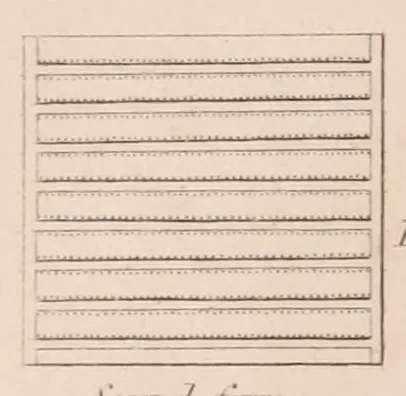
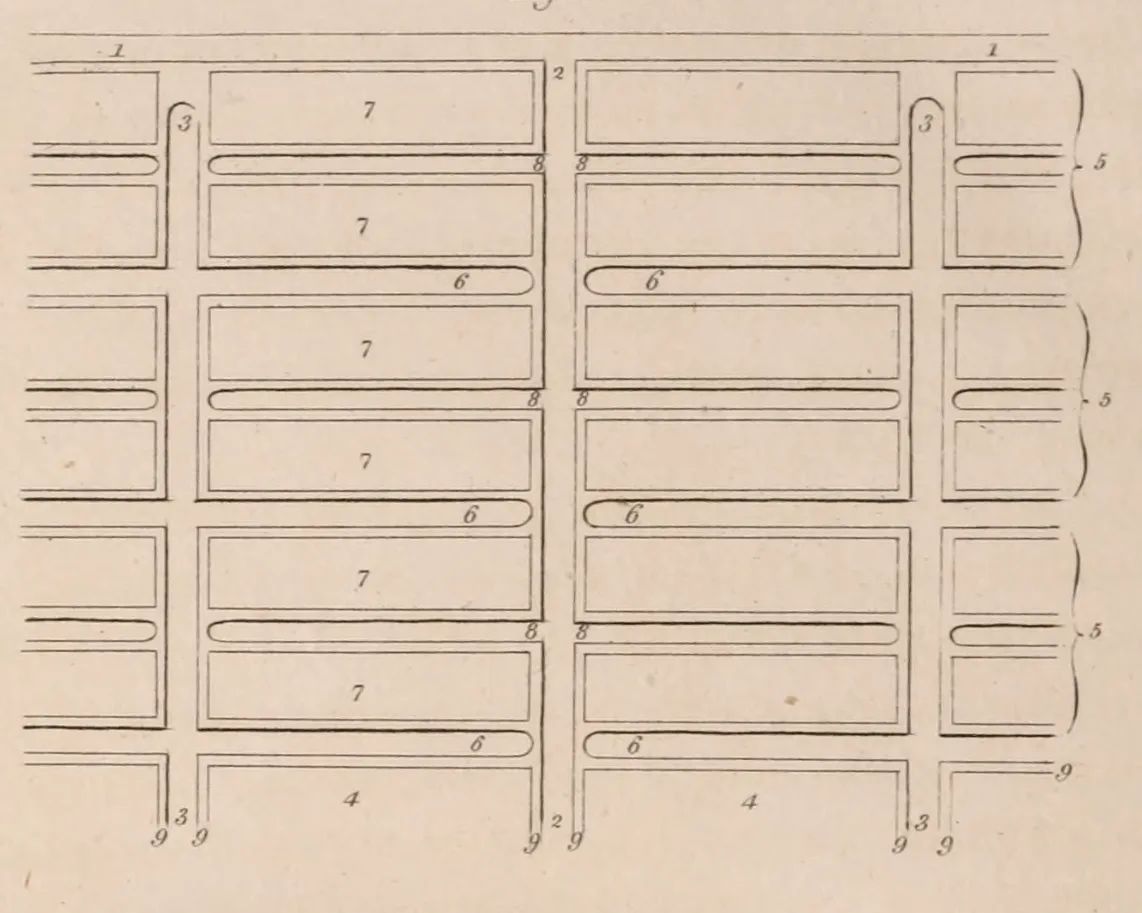
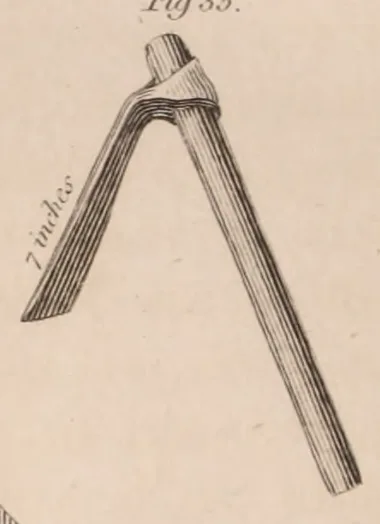
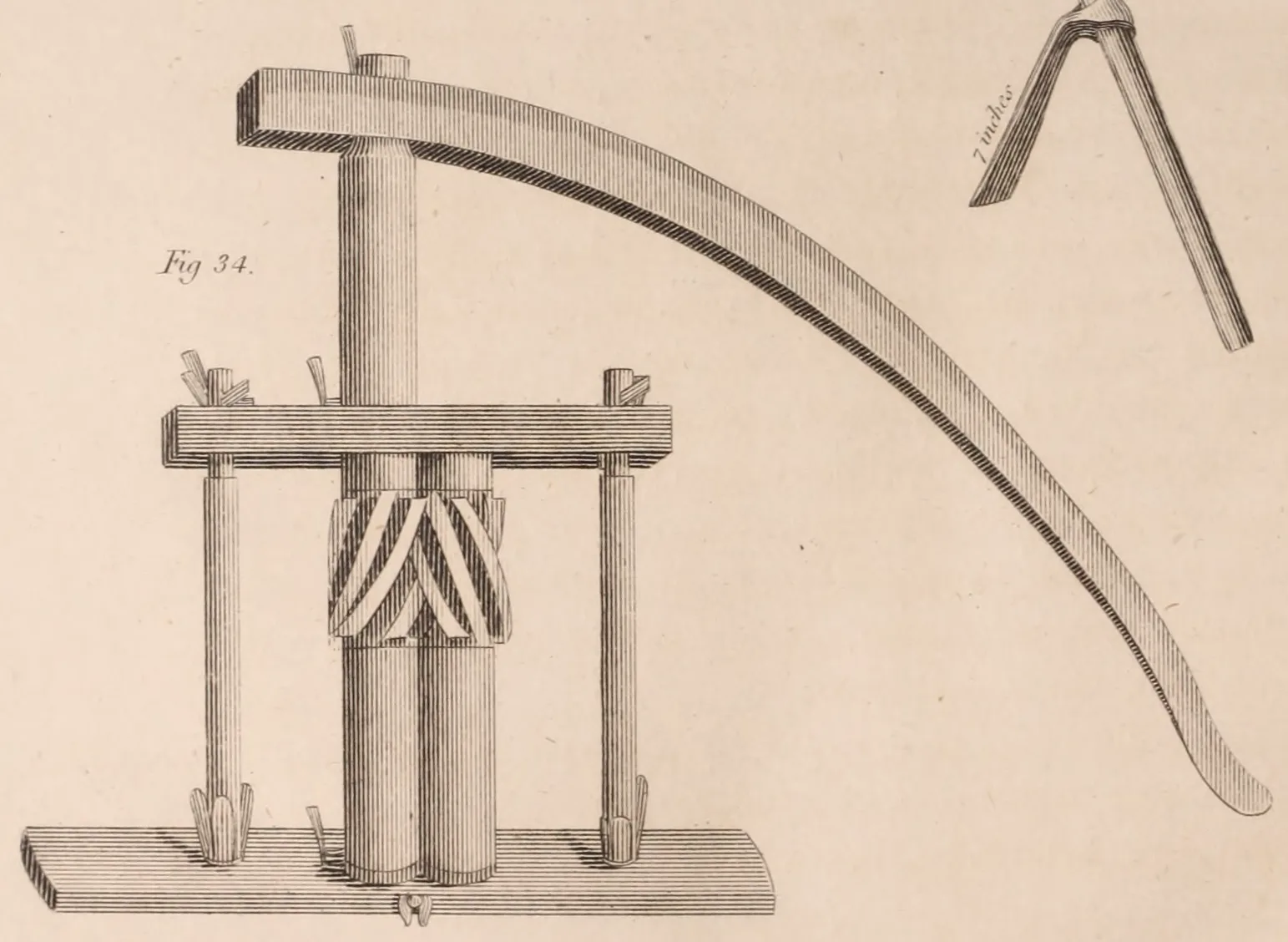
Either the expenses or the profits of this manufacture, therefore, are immense. The fine white soft sugar is made up into a kind of paste, which is put into moulds of a variety of forms, and thus hardens into solid masses, that are presented to guests at marriages, or on other great occasions; which seems to be the reason of the enormous price of this manufacture. The art of making this paste is also a secret.
Having taken some of the cultivators to the cane-fields, they showed me a plot which they said would produce a hundred Maunds of Jagory; and they observed, that every hole, in which two cuttings are planted, should produce from 6 to 10 ripe canes. By measuring this field, and allowing for the distance occupied by each hole, I found that it would plant 8000 double cuttings; but, as some holes fail entirely, I shall only take the average number of canes from each hole at between six and seven; and then the produce of the field will agree perfectly with the two Maunds of Jagory, stated by the sugar boilers to be what could be obtained from 1000 canes. I look upon this, therefore, as good data for a calculation; and, extending the measurement, I find that the acre should produce about 140 Maunds of Jagory, or 30 hundred-weight of this rude material; which is capable of being made into 15 hundred-weight of raw sugar, worth 22l. 15s. Of this, however, one third must be deducted for the expense of manufacture, leaving 15l. 3s. 4d. an acre to be divided between the government and cultivator. Of this the government nominally gets one half; but the deductions made on a division are very great. Some sugar-land here is watered by the machine called Yatam, an expense which it can well bear. In this case, the farmer, for his additional trouble, gets one quarter of the government’s share.
The sugar mills which the people here, as well as every where in the Sira Subadary, use, are two cylinders wrought by a perpetual screw, and two bullocks (Figure 34); but seven times in the 24 hours the bullocks are changed. The mill goes night and day; and, by the labour of 14 bullocks, expresses 7000 canes, which produce 14 Maunds of Jagory, or 7 Maunds of raw sugar, equal to 1½ hundred-weight. To any one of our West India planters, the wretched state of mechanics among the Hindus will, from this, be very evident; yet, miserable as this machine seems to be, it appears to me better adapted for the purpose to which it is applied, than the mill in use at Chenapatam. So far as a very slight knowledge of Jamaica will enable me to judge, the sugar planters of the West Indies have a decided advantage over those of Hindustan in climate, soil, carriage, and skill both in agriculture and mechanics; but the enormous price of labour must always be a heavy drawback on them, while they continue the present system of keeping up the population by slaves imported from Africa.
17th July.—In the morning I went three cosses to Bhidi-caray, a small fortified village situated on the side of Nandi-durga, which is opposite from Chica Bala-pura. I passed through among the hills by the side of Chin'-raya-conda; from whence, it is said, springs the Pennar, or, the Utara Pinákaní, as it is called in the Sanskrit. This river runs toward the north; and the Palar, which springs from Nandi, runs to the south. These hills may therefore be looked upon as the highest part of the country in the center of the land, south from the Krishna. The sources of the Kávéri and Tungabhadra, towards the western side, are probably higher.
Among the hills of Nandi-durga is much fertile land, now covered with Bamboos, and useless trees; but which, with a little encouragement, might be brought into cultivation: this, however, would be improper, until there be a number of people, and a quantity of stock, sufficient to occupy all the lands that have formerly been cultivated, but are now waste. Such, at least, is the opinion of the Amildar, who is a sensible man.
I took an opportunity, in company with this Amildar, of examining into the management of the Lac insect; and for this purpose we collected all the people who follow that employment. I have always found, that the more of any class of people were assembled, the more likely I was to get just information : not that all of them spoke; some one or two men generally answered my questions; but they did it without fear of reflexions from those who might otherwise have been absent ; as every one, if he chose, had an opportunity of speaking. The Hindus of all descriptions, so far as I have observed, are indeed very desirous of having every kind of business discussed in public assemblies.
The people who manage the Lac insect, in the hills near Nandi-durga, are of the cast called Woddaru ; and for the exclusive use of the trees they pay a rent to government. The tree on which the insect feeds is the Jala, which is nearly related to the Saul of Bengal, or the Shorea of Gærtner, and perhaps the Vatica Chinensis of Linnæus. All the trees that I saw here were small, not exceeding eight or ten feet in height ; and their growth was kept down by the insect and its managers ; for this size answers best. The tree, left to itself, grows to a large size, and is good timber. For feeding the insect, it thrives very well in a dry barren soil ; and is not planted, but allowed to spring up spontaneously as nature directs. It is often choked by other trees, and destroyed by Bamboos, which, by rubbing one against another, in this arid region, frequently take fire, and lay waste the neighbouring woods. By removing all other trees from the places where the Jala naturally grows, and perhaps by planting a few trees on some other hills, and protecting them from being choked as they gradually propagate themselves, the Lac insect might be raised to any extent on lands now totally useless, and never capable of being rendered arable. In Kartika, or from about the middle of October to the middle of November, the Lac is ripe. At that time it surrounds almost every small branch of the tree, and destroys almost every leaf. The branches intended for sale are then cut off, spread out on mats, and dried in the shade. A tree or two, that are fullest of the insect, are preserved to propagate the breed; and of those a small branch is tied to every tree in the month Chaitra, or from about the middle of March to the middle of April; at which time the trees again shoot out young branches and leaves. The Lac dried on the sticks is sold to the merchants of Balahari, Gutti, Bangalore, &c.; and according to the quantity raised, and to the demand, varies in price, from 5 to 20 Fanams a Maund. This is what is called stick-lac. In my account of Bangalore, I have given the process for dyeing with this substance; which, after the dye has been extracted, is formed into seed and shell lac.
I found the country beyond the hills more desolate than that near Chica Bala-pura. One third of what has formerly been cultivated is not occupied; many of the villages are entirely deserted, and have continued so ever since the invasion of Lord Cornwallis. The people say, that they were then afflicted with five great evils: a scarcity of rain, followed by that of corn; and three invading, and one defending army, all of which plundered the country, and prevented grain from being carried from places where it might have been procured; but, in destruction, the armies of the Marattahs, and of the Sultan, were eminently active; and the greater part of the people perished from want of food. In this last war they met with no disturbance from the armies; but three fourths of their cattle perished by disease. This was not owing to a want of forage, of which there was plenty; but is by the natives attributed to an infection, which was propagated from the cattle of the armies besieging Seringapatam. Between Colar and Chica Bala-pura the disease has this year again made its appearance; but it has not yet come to this side of the hills.
The whole land near Bhidi-caray has formerly been cultivated; and the champaign country seems to extend far to the westward, where, at the distance of thirty-two miles, Siva-ganga rears its conical head. The Ragy is now coming up, and makes a wretched appearance; for in every field there is more grass than corn. Notwithstanding the many ploughings, the fields are full of grassroots, which are indeed of great length, very tenacious of life, sprout at every joint, and are of course difficult to remove; but a good harrow would effect much. The farmers of this country are abundantly industrious; but their want of skill is conspicuous in every operation.