CHAP. — PAGE
I. 1. Introduction . . . . . 1
2. The Sources of Indian History . . 9
Appendix A. The Age of the Purāṇas . 22
Appendix B. The Chinese Pilgrims . 24
II. The Dynasties before Alexander, 600 to 326 b. c. . . . . . 28
Appendix C. Chronology of the Śaiśunāga and Nanda Dynasties . 46
III. Alexander's Indian Campaign : the Advance 52
Appendix D. Alexander's Camp: the Passage of the Hydaspes; and the Site of the Battle with Pōros . . 82
Appendix E. The Date of the Battle of the Hydaspes . . . . 89
IV. Alexander's Indian Campaign : the Retreat 92
Chronology of the Indian Campaign of Alexander the Great . . 119
V. Chandragupta Maurya and Bindusāra, from 322 to 273 b. c. . . . . 121
Appendix F. The Extent of the Cession of Ariāna by Seleukos Nikator to Chandragupta Maurya . . 158
Appendix G. The Arthaśāstra or Kauṭi-līya-Śāstra . . . . 160
VI. Asoka Maurya . . . . 162
Appendix H. The Inscriptions of Asoka; Bibliographical Note . . 180
VII. Asoka Maurya (continued); and his Successors . . . . . 184
The Maurya Dynasty: Chronological Table . . . . . 206
VIII. The Sunga, Kanva, and Āndhra Dynasties, from 185 b. c. to c. a. d. 225 . . . 208
Appendix I. The Invasion of Menander, and the Date of Patañjali . . 227
Appendix J. The Āndhras and Connected Dynasties . . . . 229
IX. The Indo-Greek and Indo-Parthian Dynasties, from about 250 b. c. to a. d. 60 . 233
Appendix K. Alphabetical List of Bactrian and Indo-Greek Kings and Queens . . . . . . 257
Appendix L. Synchronistic Table from about 280 b. c. to about a. d. 48 . 259
Appendix M. The Christians of St. Thomas . . . . . . 260
X. The Kushān or Indo-Scythian Dynasty, from about a. d. 20 to a. d. 225 . . 263
Approximate Kushān Chronology . 293
XI. The Gupta Empire, and the Western Satraps ; Chandra-gupta I to Kumaragupta I, from a. d. 320 to 455 . . . 295
XII. The Gupta Empire (continued) ; and the White Huns, from a. d. 455 to 606. . 318
Chronology of the Gupta Period . 345
Appendix N. Vasubandhu and the Guptas . . . . . . 346
XIII. The Reign of Harsha, from a. d. 606 to 647 348
Chronology of the Seventh Century . 373
XIV. The Mediaeval Kingdoms of the North, from a. d. 647 to 1200 . . . . . 374
Appendix O. The Origin and Chronology of the Sena Dynasty . . . . 431
XV. The Kingdoms of the Deccan . . . 439
Appendix P. The Principal Dynasties of the Deccan . . . . . 453
XVI. The Kingdoms of the South . . . 456
Epilogue . . . . . . 499
INDEX . . . . . . . 503
ILLUSTRATIONS
Rock-cut Elephant above the Asoka Inscription at Dhauli, Orissa . . . Frontispiece
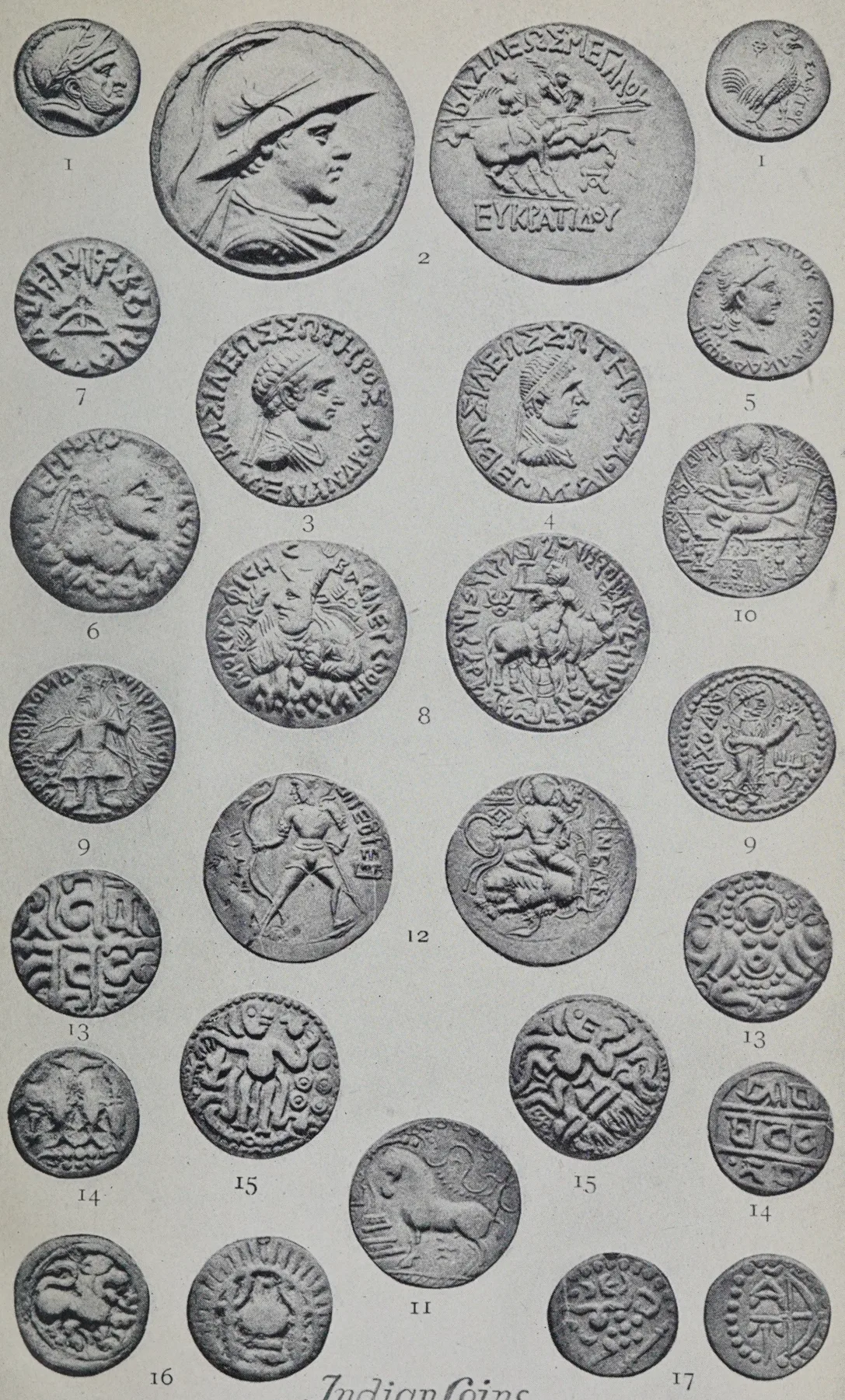
Indian Coins . . . To face xii
Piprāwā Inscribed Vase containing Relics of Buddha . . . . . 17
Indian Coins and Medals (2) . . . 76
Alexander the Great: the Tivoli Herm1 . . 114
The Birth-place of Buddha . . . 178
Inscribed Life-size Statue of Kanishka, from Māt in Mathurā District . . . 276
Inscribed Buddhist Pedestal from Hashtnagar 282
The Mārtāṇda Temple of the Sun, Kashmīr . 387
The Rock-cut Kailāsa Temple at Elūra . 445
The Great Temple at Tanjore . . 486
The Gaṇēśa Ratha at Māmallapuram . . 496
MAPS AND PLANS
1. The Battlefield of the Hydaspes . page 71
2. Plan of the Battle of the Hydaspes. To face 87
3. Position of the Autonomous Tribes conquered by Alexander . . . . 98
4. The Empire of Asoka, 250 b. c. . . . 170
5. The Conquests of Samudragupta, a. d. 340 ; and the Gupta Empire, a. d. 400 (Travels of Fa-hien) . . . . 300
6. India in a. d. 640 ; the Empire of Harsha (Travels of Hiuen Tsang) . . . 354
The later Āndhra Kings and connected Dynasties . . . . . 232
CONTENTS OF PLATE OF INDIAN COINS (1) IN THE BRITISH MUSEUM
| No. | King. | Obverse. | Reverse. | Reference. |
|---|---|---|---|---|
| 1 | Sophytes. | Head of the king r., in close-fitting helmet, bound with wreath; wing on cheek-piece. | ΣΩΦΥΤΟΥ Cock r.; above, caduceus. | Gardner, Catal. of Greek and Scythic Kings of Bactria and India, Pl. I, 3. |
| 2 | Eukratides. | Bust of the king r., diademed, and wearing helmet (kausia), adorned with ear and horn of bull, and crest. | ΒΑΣΙΛΕΩΣ ΜΕΓΑΛΟΥ ΕΥΚΡΑΤΙΔΟΥ The Dioskouroi charging r., holding long lances and palms. | ibid., Pl. V, 7. |
| 3 | Menander. | ΒΑΣΙΛΕΩΣ ΣΩΤΗΡΟΣ ΜΕΝΑΝΔΡΟΥ Bust of the king r., diademed. | Not figured. | ibid., Pl. XI, 7. |
| 4 | Hermaios. | ΒΑΣΙΛΕΩΣ ΣΩΤΗΡΟΣ ΕΡΜΑΙΟΥ Bust of the king r., diademed. | Not figured. | ibid., Pl. XV, 4. |
| 5 | Kadphises I. | ΧΟΡΑΝCY ΖΑΟΟΥ ΚΟΖΟΛΑ ΚΑΔΑΦΕϹ. Head of the king r., diademed, and closely resembling that of Augustus. | Not figured. | ibid., Pl. XXV, 5. |
| 6 | Gondophares. | Greek legend imperfect. ΒΑϹΙΛΕΩΝ . . . ΥΝΔΟΦΕΡ . . . Bust of the king r., diademed. | Not figured. | ibid., Pl. XXII, 11. |
| 7 | Sivalakura of Āndhra dynasty. | Raño Mādharīputasa Sivalakurasa. Strung bow, with arrow fixed. | Not figured. | Cunningham, Coins of Ancient India, p. 109. |
| 8 | Kadphises II. | ΒΑϹΙΛΕΥϹ ΟΟΗΜΟ ΚΑΔΦΙϹΗϹ. Bust of king emerging from clouds; helmet and diadem; Greek chlamys; club? in r. hand. | Kharoshṭhī inscription, maharajasa, &c. Śiva and Indian bull. | Gardner, op. cit., Pl. XXV, 7. |
| 9 | Kanishka. | Standing king in Turki costume, with spear and sword. Legend in modified Greek characters. ΡΑΟΝΑΝΟΡΑΟ ΚΑΝΗΡΚΙ ΚΟΡΑΝΟ (? Ϸ to be read sh). | ΑΡΔΟΧΡΟ Female deity with cornucopiae. | Gardner, op. cit., Pl. XXVI, 6. |
| 10 | Samudragupta. | King seated, playing lyre. Legend, mahārājādhirāja śrī Samudraguptah; on footstool, si. | Not figured. | J.R.A.S., 1889, Pl. I, 5. |
| 11 | Samudragupta. | Horse, standing before altar and sacrificial post. Legend imperfect; between horse's legs, si. | Not figured. | ibid., 4. |
| 12 | Chandra-gupta II, Vikramāditya. | King shooting lion. Legend, mahārājādhirāja śrī. | Goddess seated on lion. Legend, Śrī Siṁha Vikramaḥ. | ibid., Pl. II, 6. |
| 13 | Kīrttivarman Chandella. | Legend, śrīmat Kīrttivarmmadeva. | Four-armed goddess, seated. | Cunningham, Coins of Mediaeval India, Pl. VIII, 12. |
| 14 | A Pāṇḍya king. | Two fishes under an umbrella, with other symbols. | Legend uncertain. | Elliot, Coins of Southern India, Pl. III, 129. |
| 15 | Rājarāja Choḷa. | Standing king. | Seated figure. Legend, Rājarāja. | ibid., Pl. IV, 165. |
| 16 | A Pallava chief. | Lion r. | Vase on stand. | ibid., Pl. II, 49. |
| 17 | A Chera king. | Seated figure, corrupted. | Bow and umbrella. | ibid., Pl. III, 128. |
Notes
- 1. Dr. P. Gardner exhibited to the Philological Society in 1915 a photograph of a colossal statue of Alexander found at Cyrene by the Italians, which he thought would be considered in future as the best portrait. He pointed out that the Tivoli herm is partly restored and is in bad condition. The herm is probably intended for Alexander but it is not wholly certain that the head belongs to the inscribed pedestal, or that the inscription is contemporaneous.