Maurice Bloomfield
1855 - 1928
Bielitz, Austria (now Bielsko-Biała, Poland)
Biography
Maurice Bloomfield was one of America’s foremost Sanskrit scholars, whose meticulous philological work established lasting standards in Vedic studies. As Professor of Sanskrit and Comparative Philology at Johns Hopkins University for nearly half a century, he trained generations of scholars and produced foundational reference works.
The Vedic Concordance
Bloomfield’s greatest contribution to scholarship was his Vedic Concordance (1897), published as part of the Harvard Oriental Series. This exhaustive index of every phrase in Vedic literature remains an indispensable tool for scholars. The work’s painstaking accuracy and comprehensive coverage exemplified Bloomfield’s exacting scholarly standards.
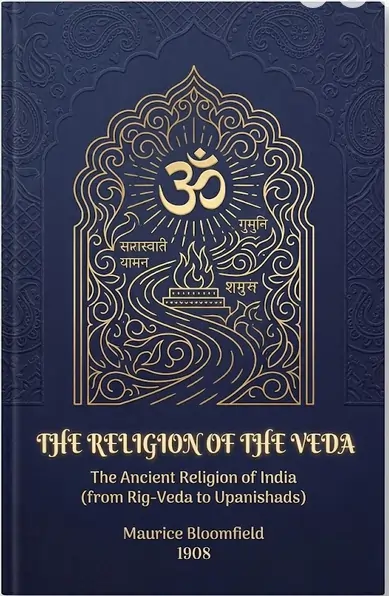
The Religion of the Veda
In 1906-07, Bloomfield delivered a series of lectures that became The Religion of the Veda (1908). This accessible yet scholarly work traced the development of Hindu religious thought from the nature worship of the Rig-Veda through the ritualistic formalism of the Brahmanas to the pantheistic philosophy of the Upanishads—a trajectory he described as moving from polytheism through formalism to pessimistic theosophy.
The Atharva-Veda
Bloomfield was a leading authority on the Atharva-Veda, the fourth Veda dealing with magic, charms, and domestic ritual. His translation of selected hymns and his studies of Atharvan material opened this less-known Veda to scholarly attention.
Academic Leadership
Beyond his own scholarship, Bloomfield was an influential figure in American Oriental studies. He served as president of the American Philological Association and the American Oriental Society, helping to establish Indo-Iranian studies as a respected field in American academia.
Legacy
Bloomfield’s work exemplified the rigorous philological approach to Vedic studies. His tools and translations continue to serve scholars, while The Religion of the Veda remains an accessible introduction to its subject. His emphasis on close textual study and his refusal to speculate beyond the evidence set standards that shaped the field.
Timeline
Birth in Austria
Born in Bielitz, Austria, in a Jewish family that later emigrated to America
PhD from Johns Hopkins
Earned one of the first PhDs from Johns Hopkins University
Professor of Sanskrit
Appointed Professor of Sanskrit and Comparative Philology at Johns Hopkins
Vedic Concordance
Published his monumental Vedic Concordance, an indispensable reference work
The Religion of the Veda
Published lectures tracing Vedic religion from Rig-Veda to Upanishads
Passing
Died in San Francisco, leaving a rich scholarly legacy