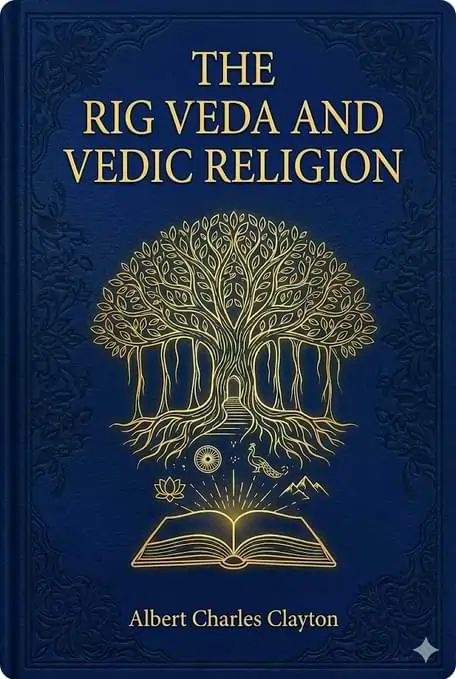
A. C. Clayton
-
Biography
A. C. Clayton was a British missionary and scholar who spent decades working in South India, developing deep expertise in Tamil culture, Dravidian religious practices, and Vedic studies. His work represents early 20th-century missionary scholarship that sought to understand Indian religious traditions.
Major Works
Clayton authored several significant works during his time in India:
- The Rig-Veda and Vedic Religion (1913) - A comprehensive introduction to Vedic literature and early Aryan religion
- The Paraiyan - Published in the Madras Government Museum Bulletin
- Gangai’s Pilgrimage - A literary work
- The Tamil Bible Dictionary - A reference work for Tamil-speaking Christians
The Rig-Veda and Vedic Religion
His most substantial scholarly contribution was The Rig-Veda and Vedic Religion (1913), published by the Christian Literature Society for India. This work was intended as a revised and expanded treatment of Dr. Murdoch’s earlier account of the Vedas, incorporating modern scholarship and interpretation methods available at the time.
Clayton drew extensively on the work of leading Indologists including Max Müller, Macdonell, Bloomfield, Whitney, and others. He made particular use of R. T. H. Griffith’s translations of the Vedas, which were published in Benares and considered among the most complete English renderings available.
Scholarly Approach
While writing from a Christian missionary perspective, Clayton demonstrated genuine scholarly rigor and respect for Vedic tradition. He acknowledged his debt to numerous teachers and scholars, and his work includes:
- Careful compilation of Vedic texts with accurate translations
- Extensive footnotes and bibliographic references
- Observations on Dravidian influence on Aryan religion based on his direct experience in South India since 1892
- Accessible presentation aimed at “the average student-reader rather than the specialist”
Contribution to Vedic Studies
Clayton’s work made Vedic religion accessible to English-speaking students and general readers in early 20th-century India. While some of his interpretations reflect the limitations of his era and missionary context, his careful compilation of texts, translations, and scholarly commentary remains a valuable historical document of how Vedic literature was understood and presented in colonial India.
Timeline
Arrived in South India
Began work in South India, gaining firsthand knowledge of Dravidian culture and religious practices
The Rig-Veda and Vedic Religion Published
Published comprehensive study of Vedic religion for the Christian Literature Society for India